

Hall de Lumieres 49 chambers street
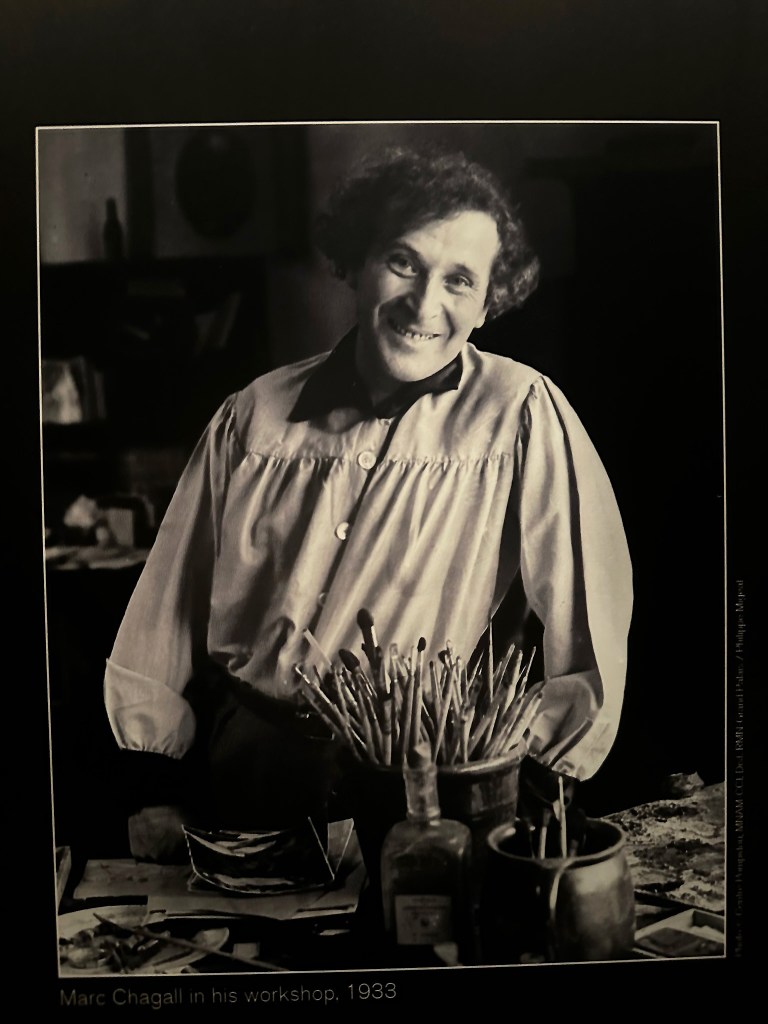
In anticipation of seeing this tremendous exhibit in the historic and beautifully restored building, I’m looking forward to being surrounded by color and being transported to a different world. Marc, or his real name, Moishe Segal, was a talented and revolutionary artist; as well as a preeminent Jewish artist. Not only because he was a Jew, as many artists were and are, but because that identity and the Jewish shtetl of his childhood remained his inspiration and he used those images to build his artistic repertoire. His Hasidic (religious) upbringing, and his nostalgia and longing for his home, created a wealth of imagery that he returned to throughout his career. Like most artists, the visual vocabulary builds on itself and we see many repeated symbols, the lovers, the animals – goats, cows and chickens, flowers and the small wooden houses of his native Lizno (near Vitebsk, Belorussia), where he was born in 1887.
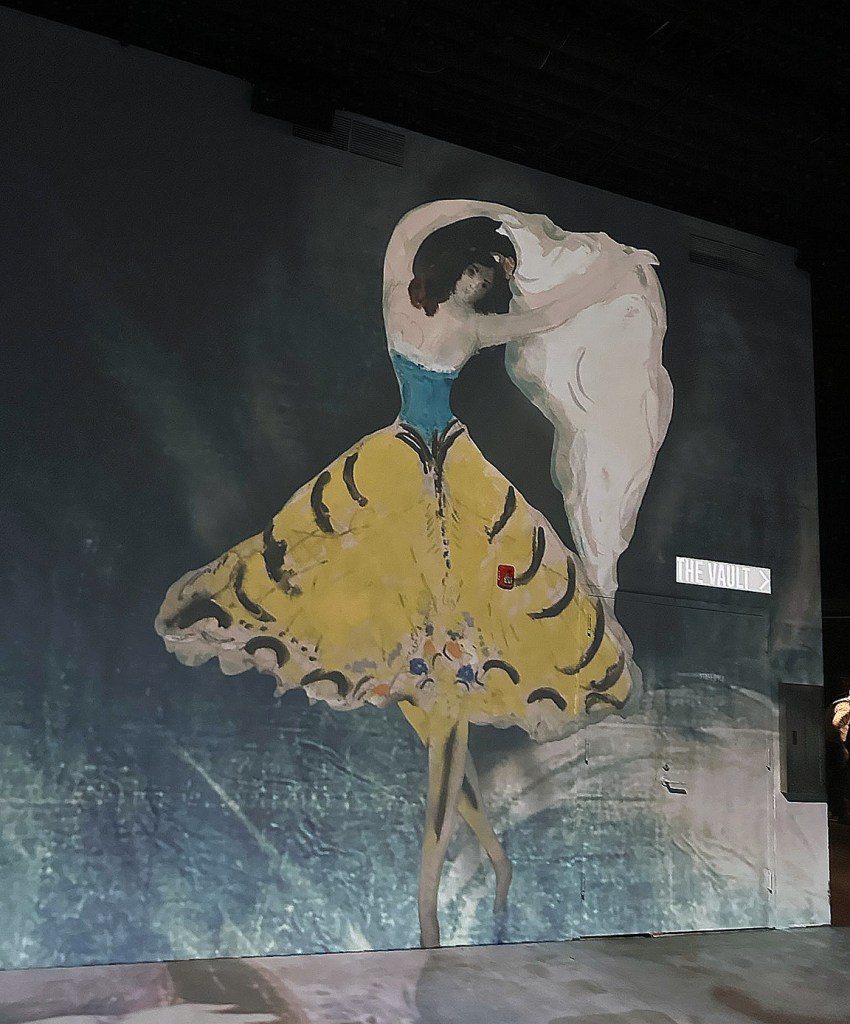

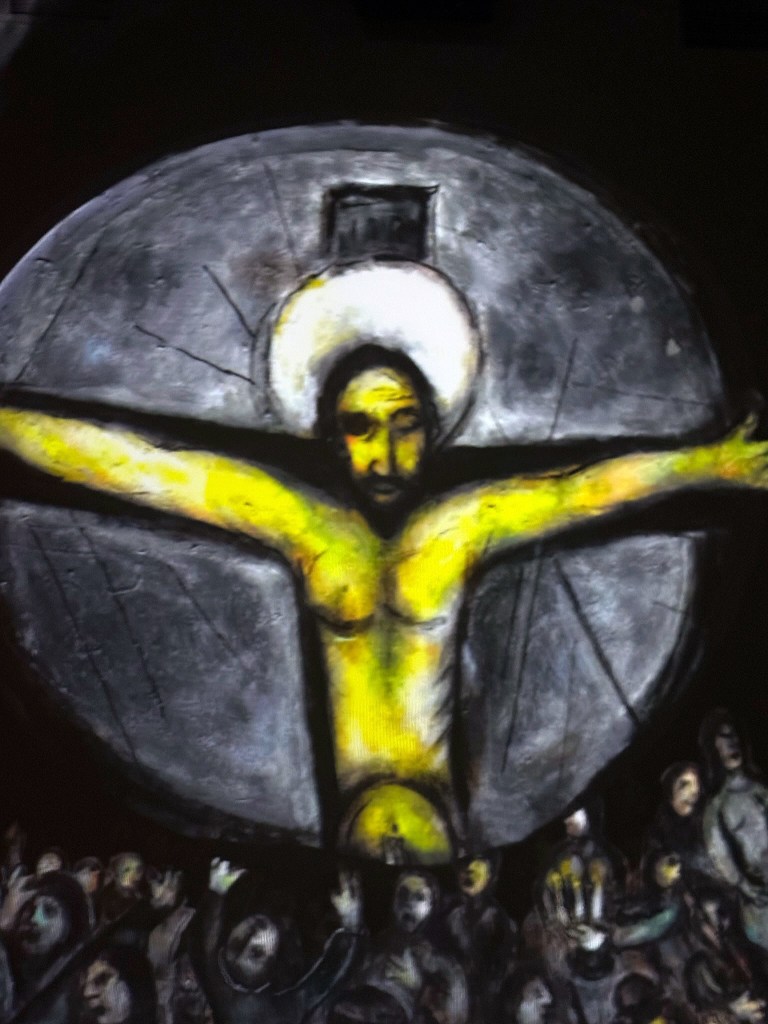
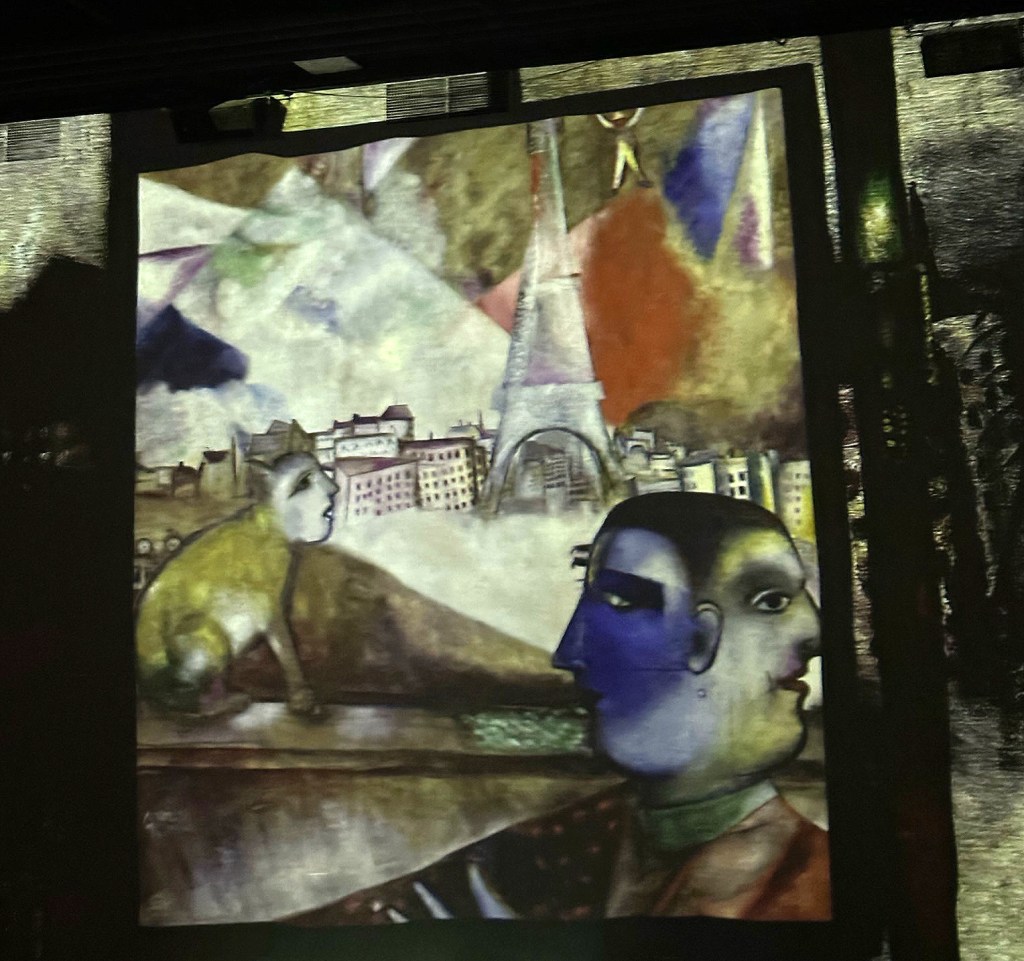
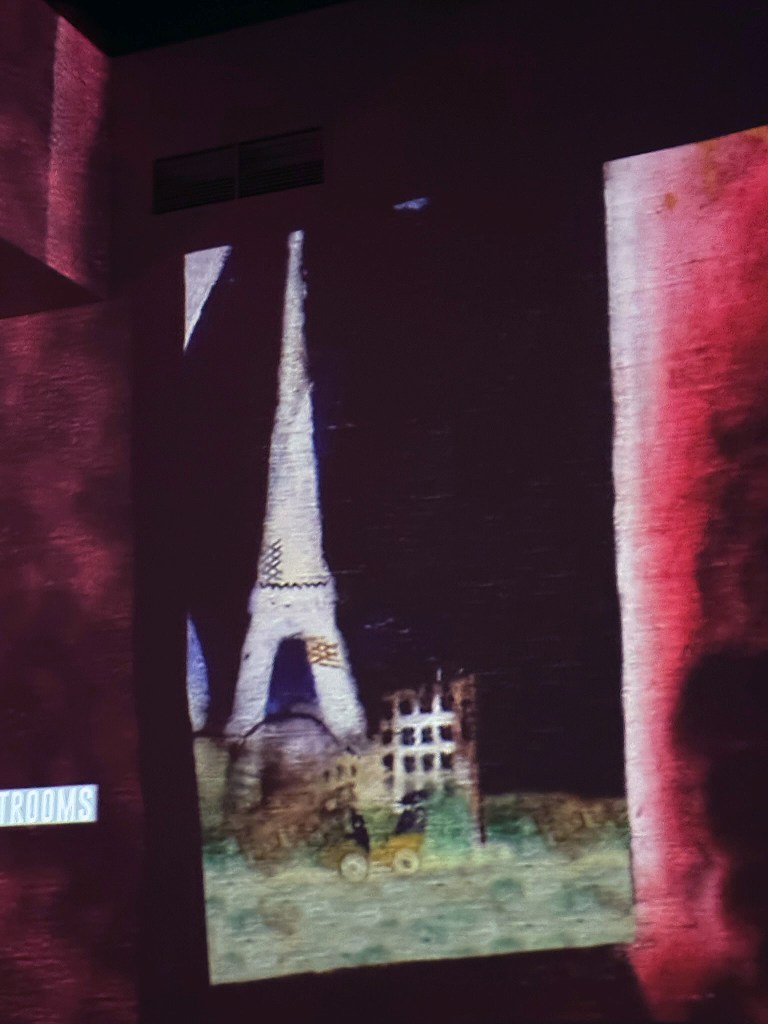
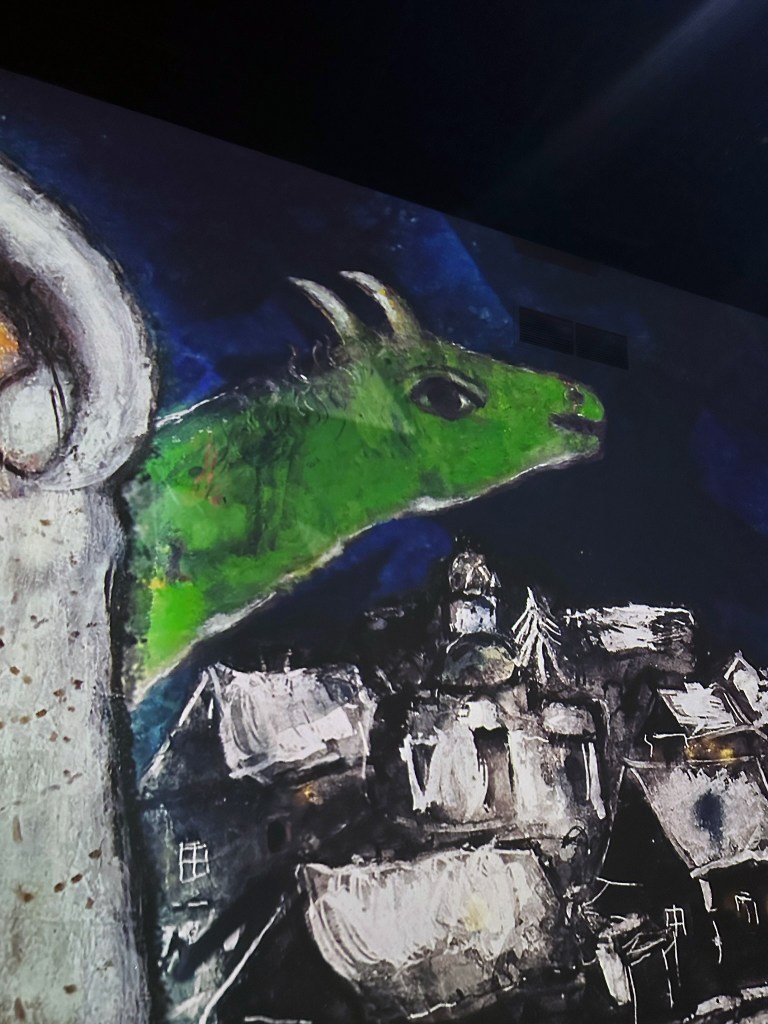
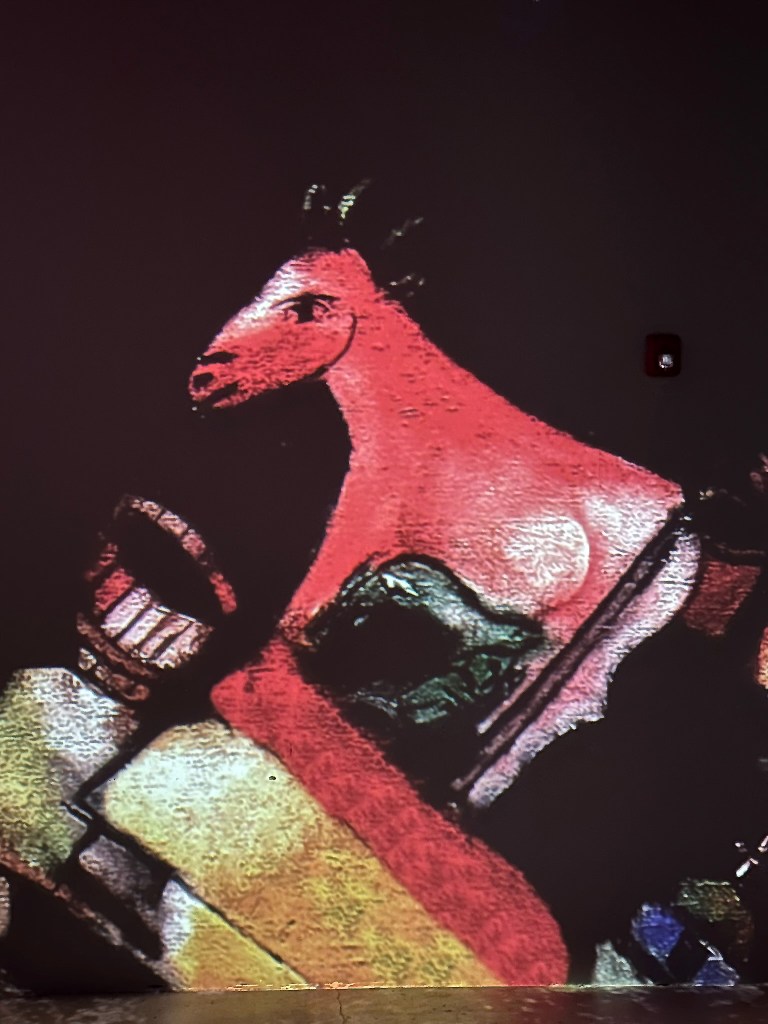

The show is tremendous. It truly makes the paintings sing and takes apart his two dimensional works to highlight the subject matter and to bring it to life. It’s visual poetry, in motion, set to beautiful music. The visual effects of this production, displayed on 40 feet tall marble walls, adorned with columns, culminating in gorgeous stained glass ceiling windows, is absolutely mesmerizing. It’s almost too much to take in.
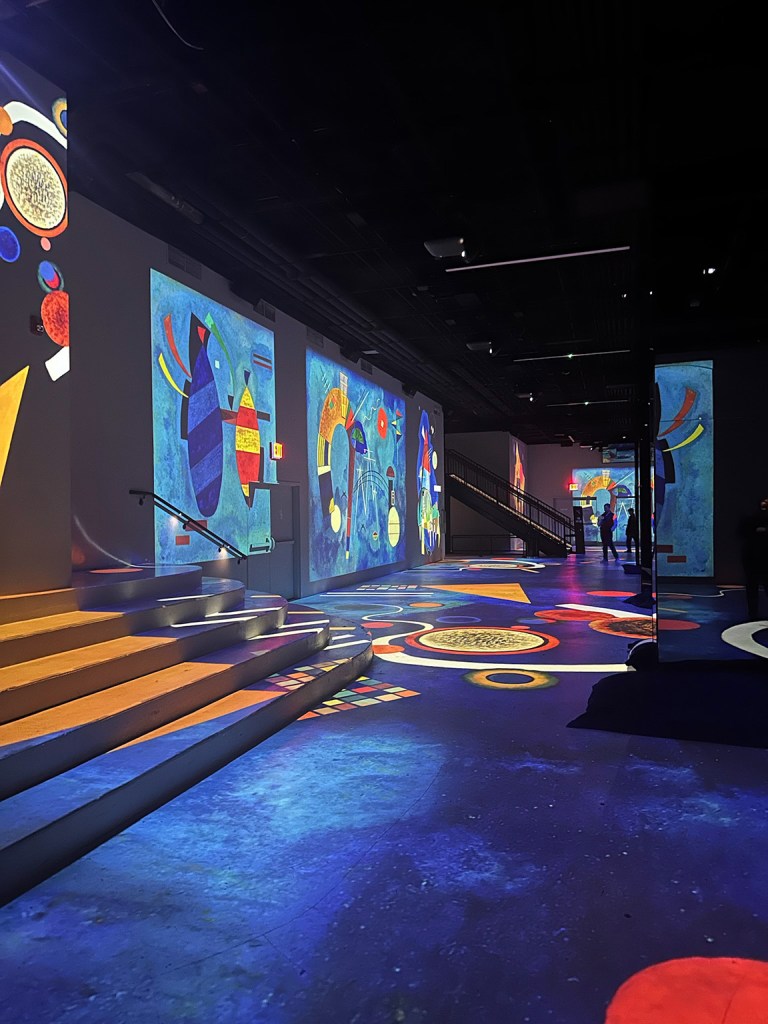
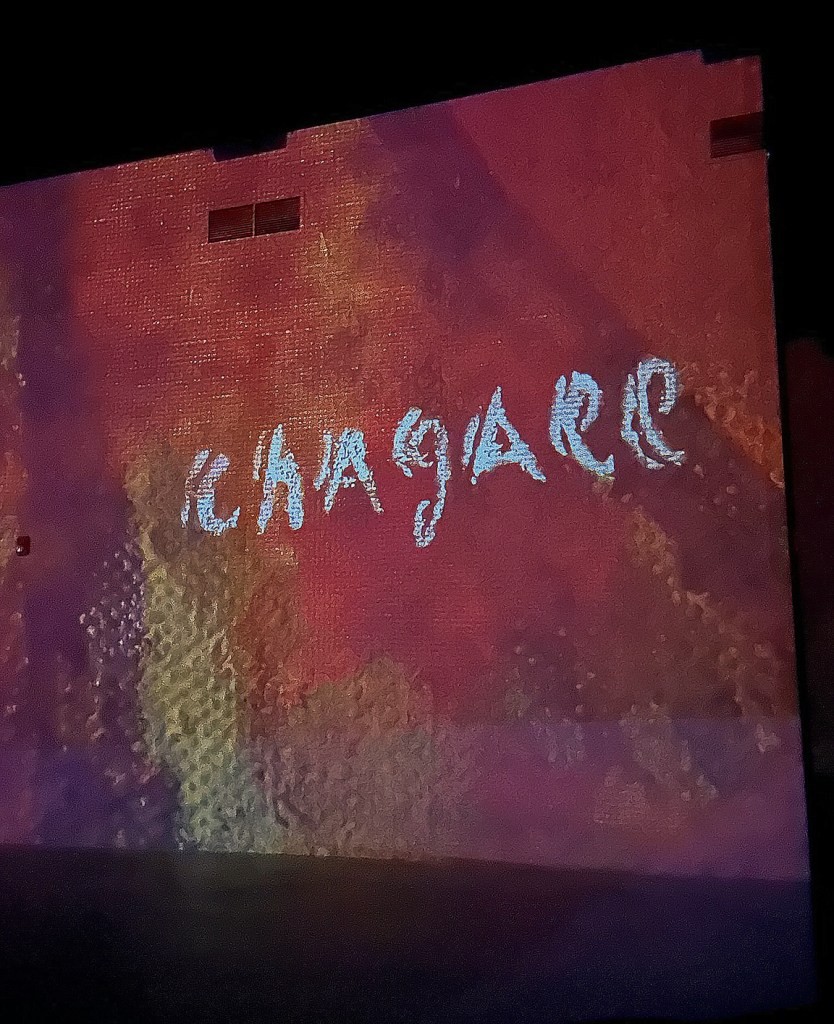


There’s a bonus show of another Russian speaking artist, Vasiliy Kandinsky, that’s also an explosion of color, highlights the artists experimental approaches and his evolution to non representative art – abstract forms of expression. What am i supposed to see here? In his earlier works, you could discern objects a house, a landscape amid waves of pure color. In his later work, he was getting away from the real world in hearing the colors. He had synaesthesia, a rare conditions that blurs the senses, which allowed him to hear color. He wasn’t painting, he was composing a symphony in color on canvas. That’s why in later years, he moved to more amorphous, non-geometrical objects, he didn’t want to distract from the music with recognizable imagery but rather for us take in the composition and hear the colors. So with Kandinsky’s later work, it’s not about trying to puzzle out the scene, rather allowing the colors to bloom and fill your imagination.
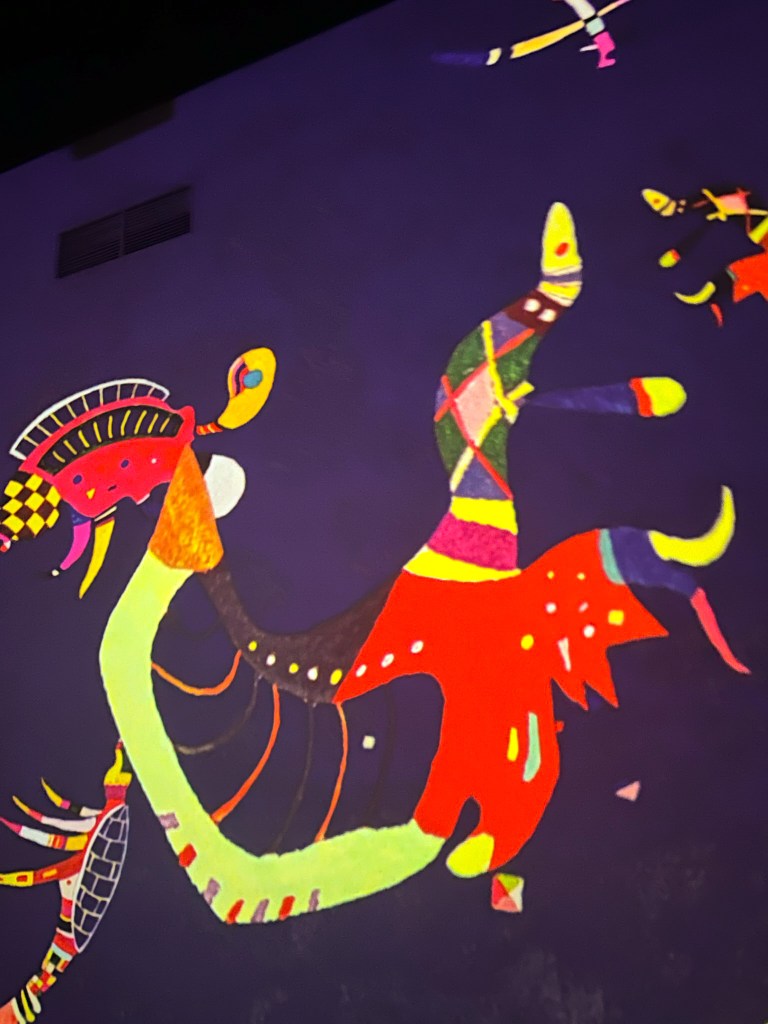

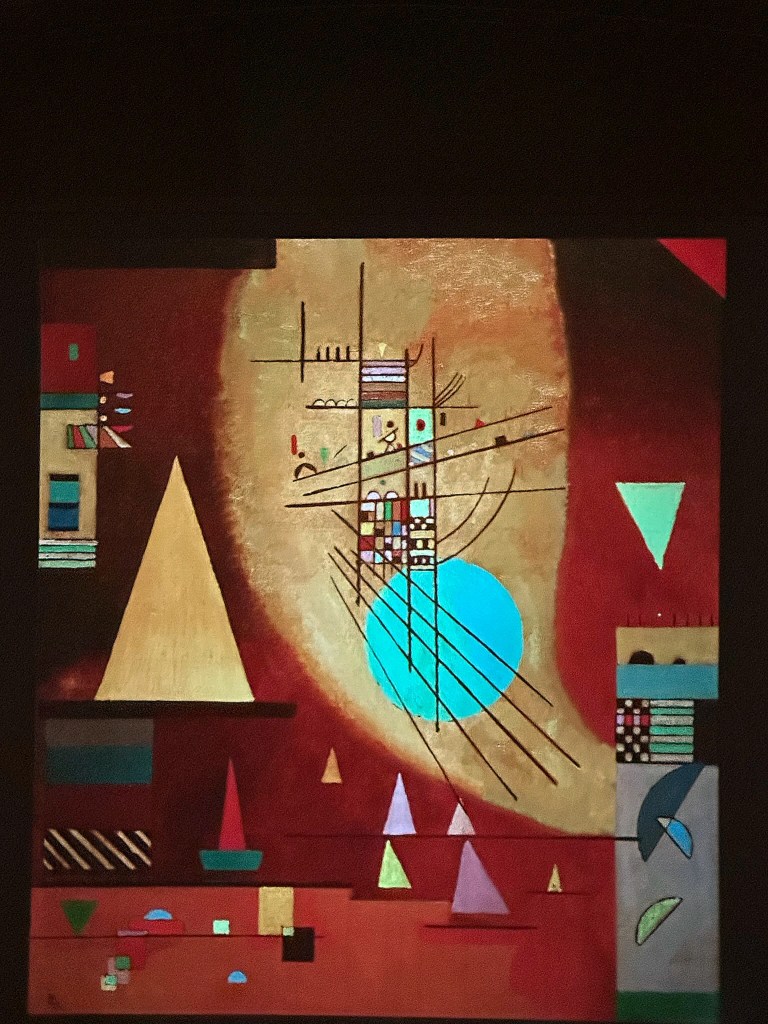
There’s also space down stairs with additional visual treats and a room in what used to be the bank’s vault that’s covered in mirrors for the ‘infinite horizon’ videos, which, reflected in the mirrored walls, are truly infinite.
An aside about the building. 49 Chambers is a landmark, that was built in 1912 as a bank (Emigrant Savings Bank) in Beaux-Arts style. It was the largest bank in the country when the building went up and the company that owns Hall the Lumieres restored this building beautifully to have these types of exhibits here all year round. The first one, focused on Gustav Klimt’s art, ran in 2022 and was a wonderful, and truly immersive, experience.
This experience engages all of your senses. It’s colorful and incredibly well made. It has the power to take you away from quotidian worries and that, in itself, has tremendous value.

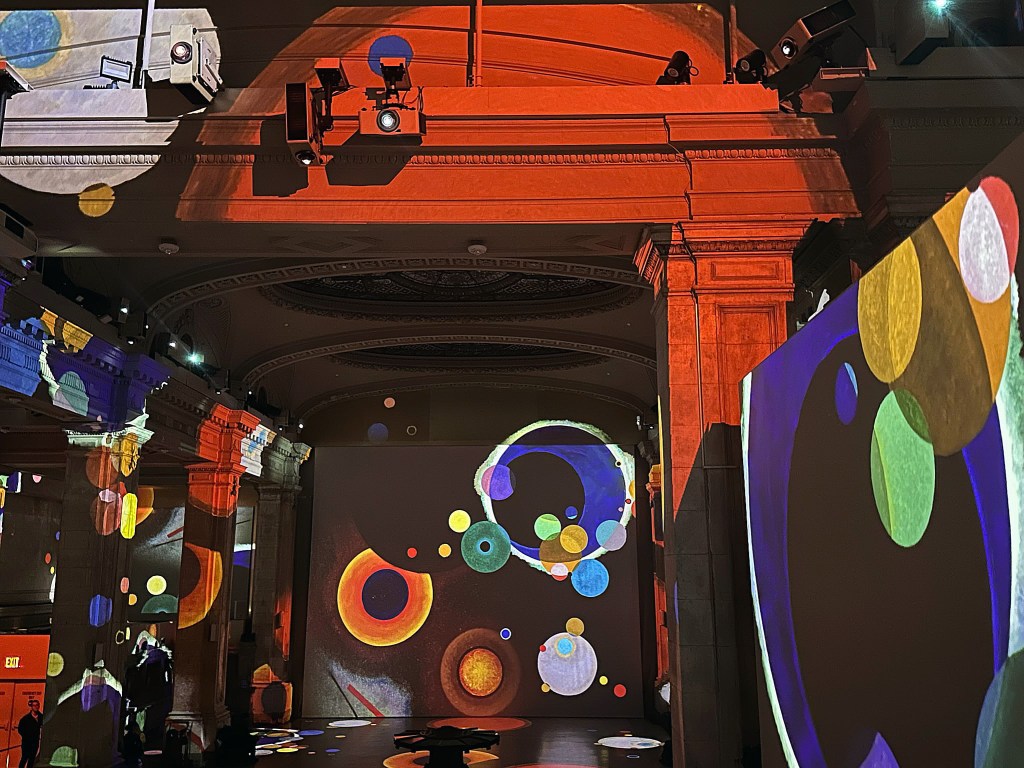
This type of production allows for different type of engagement, it’s no longer just for the “art crowd”, this is accessible to all of us, even children. They can run and scream and touch everything (except for the large screen in the main room). We can engage with the works, in a beautiful space but without the stuffiness of traditional museums and the snobbiness of the “art crowd”. The images drop us into the artists’ lives, their inspiration. It puts things in perspective, it included images of 1940s NYC that Chagall saw when he came here, escaping fascism. The pictures of his studio, the love of his life, his wife Bella. The museum directors, specifically, MoMAs Alfred Barr, helped him and his wife escape, we shudder to think of what fate had in store for them, had they stayed in Europe during WWII (concentration camps).
Chagall and Kandinsky are both formidable and exciting artists, each in their own right. They were both Russian speakers and were born in the 19th century but came from very different backgrounds and arrived at very different ways of artistic expression. While Kandinsky is one of the founding pioneers of abstractionism, at cutting out the noise and zeroing in on geometry and clean lines, focus is on color, shapes, that creates this energy. Almost machine-like, its the art of its times. It creates energy, and different and quite distinct visual representations. The fact that he created a specific visual language “Oh that’s Kandinsky” we say, he could be spotted from afar.
Chagall has never shunned realism altogether, as we can usually discern key figures, quite clearly. The people, the houses, the animals, the sky but then he puts it all on its head, literally. Its visual poetry. Its toying with our imagination. You know what it is but you don’t understand what it’s doing. Cows flying, lovers floating above a village, familiar shapes contorted and made more magical with use of bright and unexpected colors.
Below are a couple of videos from the show:
Leave a Reply