

I’ve been avoiding the European painting galleries at the Met. After a while, it all seems to blend together, religious paintings, saints and baby Jesus, or wealthy people decked out in their finery. It gets boring and repetitive, or so I thought.
Taking a closer look, there’s a lot that’s really exciting. As the name of this post suggests, there’s plenty in these galleries that’s really non-boring.
As a poignant example we can take a closer look at the painting below, called Venus and Cupid, completed in1520 by Lorenzo Lotto. The painting is entertaining and is packed with imagery that allows the viewer to observe it again and again and find new interesting elements.

Some of the elements that jump out right away is the naked form of the woman, and her classical form, certainly influence by classical antiquity art objects from Ancient Greece and Rome. She’s holding a wreath, which in Rome symbolized military victory, they were used to crown the victorious. The circle representing eternal life, was also used in the burial proceedings of Christian virgins so we can assume, despite the woman’s unashamed nakedness, that she was indeed a virgin, and not a courtesan (escort).
For more info:
https://www.metmuseum.org/audio-guide/playlists/look-again-european-paintings-1300-1800
The most jarring thing for me, is the little boy peeing on the woman through the laurel wreath. I don’t know about you, but I wouldn’t consider that a very fun occurrence. However, in this context, it’s Cupid, pure and innocent, he’s actually putting holy water on the woman, as a form of blessing. Ok, not a blessing I’d want to receive but definitely non-boring.
There’s a shell above the woman’s head, which was used as a symbol of femininity and even female genitalia, the opening of the shell reminiscent of vulva. Shells were a symbol used throughout art and architecture from ancient antiquity to the modern day with painters such as Tamara de Lempicka using the symbols in her revolutionary new approaches to art. This is a great blog about use of shells in art.

This is an example of Henry Matisse using the shell imagery in his fauvist approach:
The pink object on the right hand side is a conch shelf used to bring life to a still life painting of cup, water carafe and green apples. The pink color of it is reminiscent of skin and is open to various interpretations.
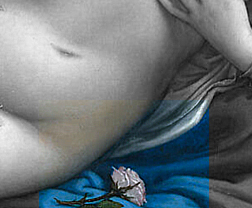
To continue exploring our Venus and Cupid masterpiece, I notice the pink rose on the bottom of the painting next to Venus’ hip. It symbolizes goddesses of love, Aphrodite and Venus, from Roman and Green mythology and is another reason why this naked form is not viewed as vulgar because after all, she’s not human, she’s a mythical creature from classical antiquity myths. This was the one and only loophole for painters of this period, the moral code of society was religious and very strict, woman could not even be left alone with a man and wealthy women were accompanied by their maids every time they left the house but the painting of goddesses and nymphs from reviving canon of classical antiquity pantheon of gods, was permissible.
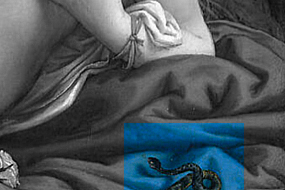
There’s also a little snake on the bottom of the painting, which doesn’t scare Venus at all. The snake is harmless and also packed with symbolism, one of which is fertility. The met guide explains that this painting was presented for a marriage (if you can believe that) and the symbol of fertility would be very appropriate since the main reason for marriage at this time was to have heirs and secure the family legacy.
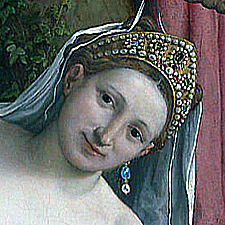
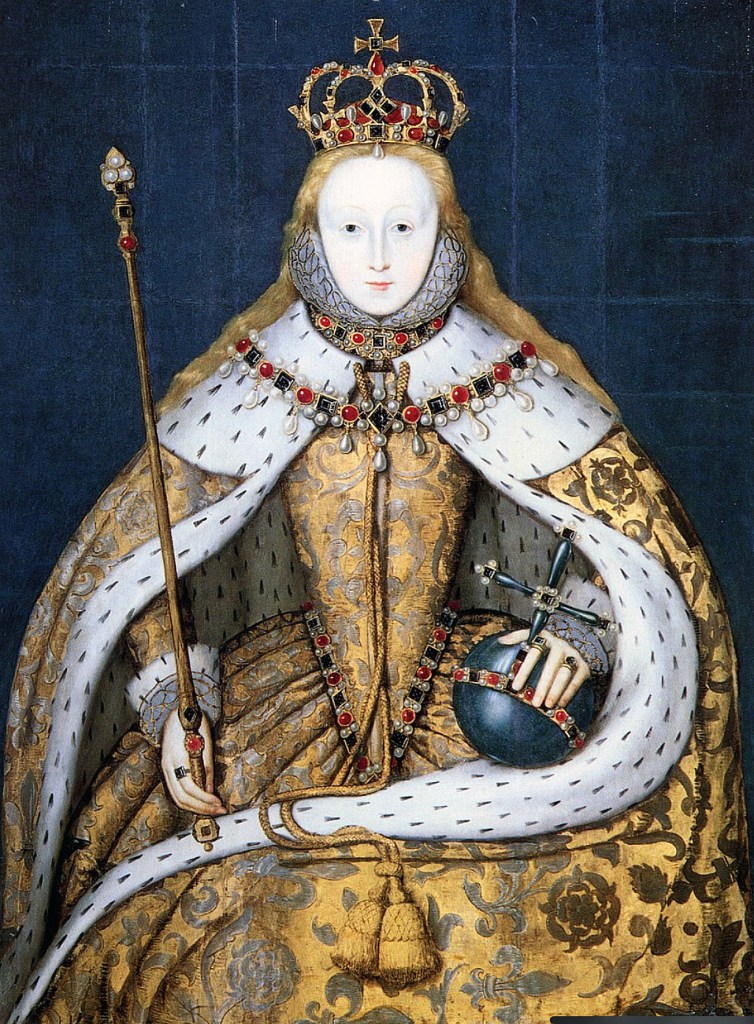
Our Venus is also wearing one earring with a large pearl. Pearls were also full of symbolism, representing wealth and status but also virginity and purity. They were a favorite stone of European nobility who covered their dresses and crowns with pearls, as can be seen below in the portrait of Elizabeth I, arguably the most famous English monarch painting in the same time period. It was completed in 1510, and is part of the permanent collection at the National Gallery, in Trafalgar Square, London. Also incredible for this time period, the original portrait of Queen Elizabeth was done by a woman artist, Levina Teerinc, court painter to the English monarchs from Henry VIII to Elizabeth I.

One final mystery I can’t puzzle out is the earring, there’s only 1. What was the intention here? With so much thought and detail in this work of art, one thing is for sure, this is intentional, the artist didn’t simply forget the paint the other one. What does this mean? Is the Venus incomplete, is it an allusion to the bride that’s incomplete until she gets married? This is an excellent article about Renaissance jewelry but still doesn’t shed any light on why only 1 earring.
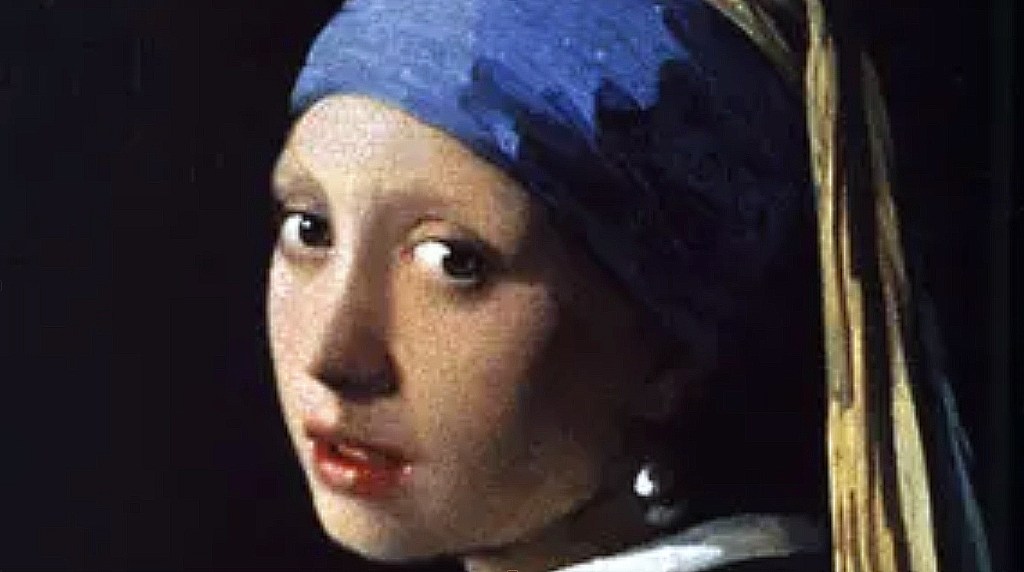
The most famous pearl earring in art history was done by Vermeer in the Painting called Girl with a Pearl Earring, 1665. There’s also only one pearl earring and it’s also on the left ear but we assume there’s another earring, it’s just the way the girl’s head is turned, we can only see one. Click here to see more from the Frick.
The New Yorker article gives insight into this painting when it came to NYC’s Frick museum for the show of Dutch painters and highlights the fact that pearls were extremely expensive so the girl with the pearl earring is actually the girl with a fake pearl earring.
The non-boring doesn’t end here. There’s plenty more to be explored in this painting and I can’t wait to get back to the Met to see it again, in person. And I hope you will as well.
Leave a Reply