

There’s a magical house on Fifth Avenue. It looks like it belongs in a fairy tail, it has pink brick, beautiful flourishes, and a huge private garden. Perhaps the most striking thing about this house is that it’s the only property along fifth avenue that does NOT face Central Park. While Central Park views are the most desirable of all real estate perks, this house faces its own garden like it can’t be bothered to face the public park. Its grandeur and beauty are hard to ignore and it’s even harder to believe that the owner of this place wanted to build a “modest” house for his wife and daughter. The person who commissioned this mansion is none other than Andrew Carnegie, the wealthiest of the Gilded Age robber barons, and the one who headed what eventually became the first billion dollar company, US Standard Steel.
This private residence has been converted to a Smithsonian Museum dedicated to design called the Cooper Hewitt. It’s located on 91-92 street of the Museum Mile, stretch of 5th Avenue that contains the Met, Neue Gallery, Guggenheim and the Jewish Museum, along with surviving examples of gilded age architecture, of which the Carnegie mansion still reins supreme. The mansion has been beautifully restored in 2014 and has incredible details such as carved wood and the gold gilded music room. It’s impressive, elaborately decorated, and definitely worth the visit. The glass conservatory alone is worth the price of admission, with huge windows it faces the largest private garden in New York and provides a glimpse of what it was like to be a robber baron in the gilded age, to have all this beauty and grandeur at your disposal, as your own private residence.
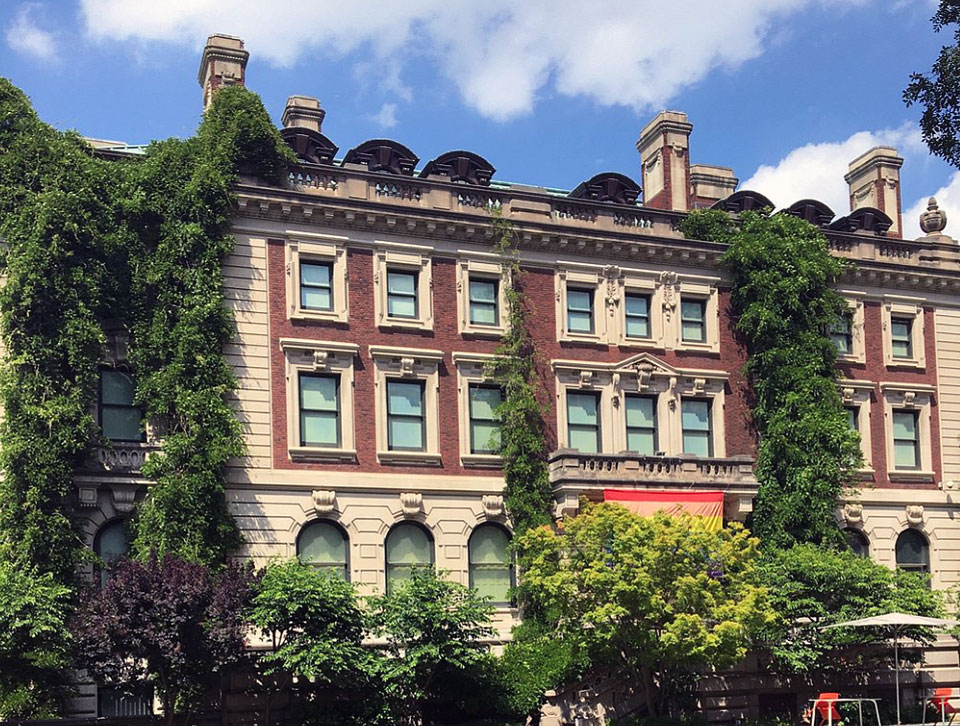
Its 65 rooms are located across 5 floors that gave the name to the entire neighborhood, still known as Carnegie Hill. Completed in 1902, it was revolutionary and ground-breaking in many ways. It was the first private residence with a steel frame, had the largest private garden, 2 elevators, huge boilers for central heat and a precursor to central air conditioning, even a railroad track in the basement to bring coals from storage to the boilers.

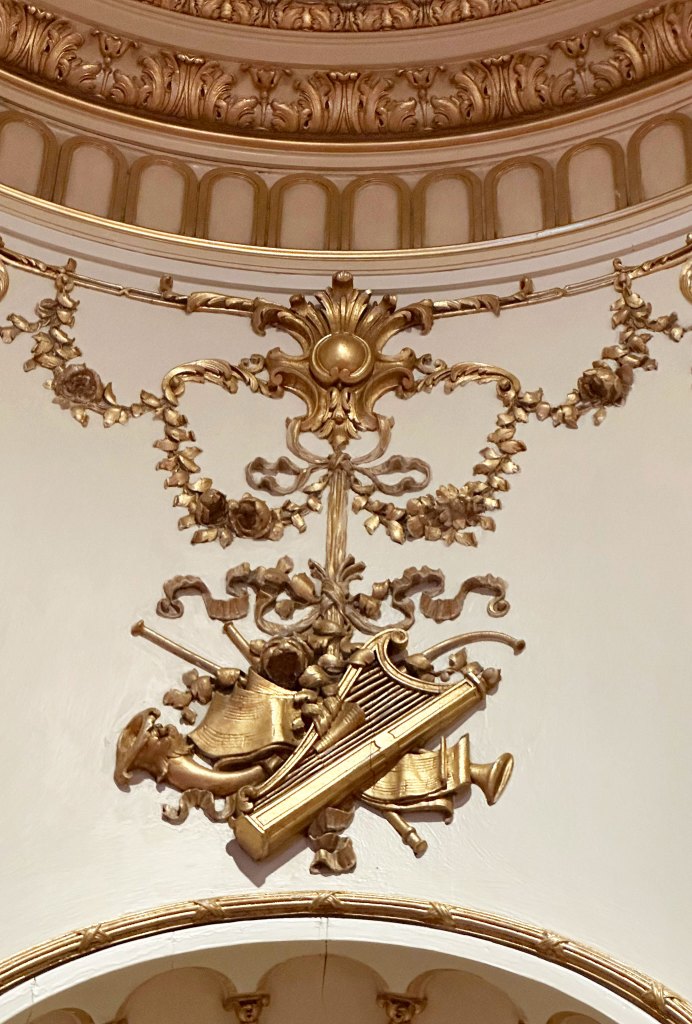

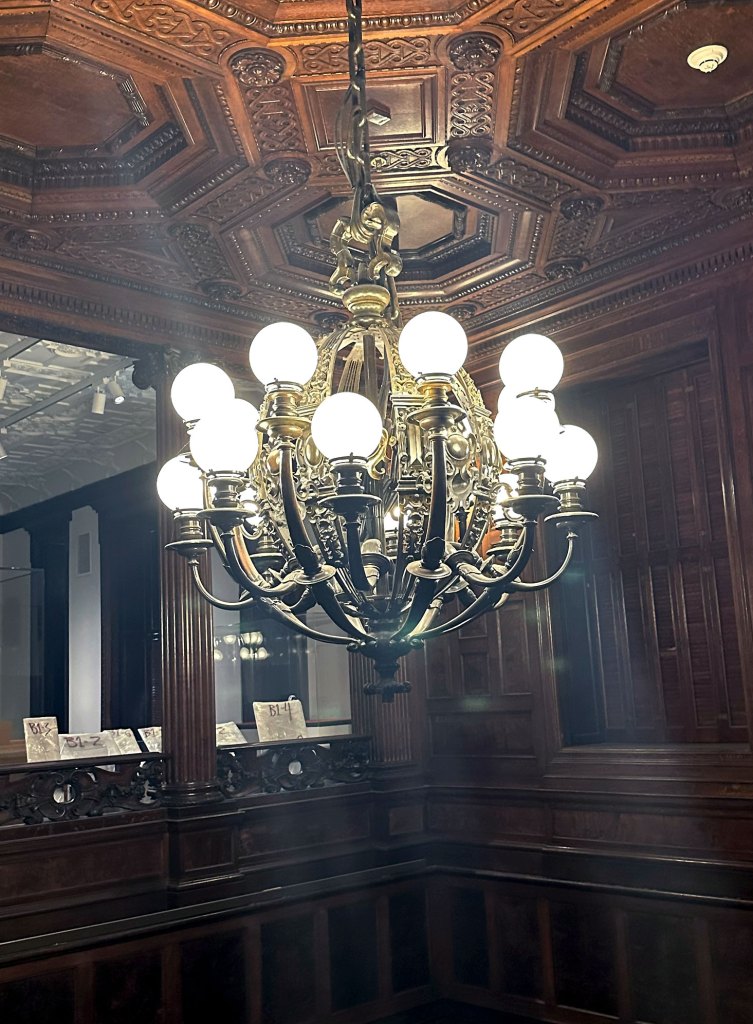
Andrew Carnegie bought 11 parcels of land in this area to build a private residence for his wife and daughter, Margaret, and to control who his neighbors would be. Part of the 92nd Street block would be his garage for his multiple vehicles. In many ways, he was one of the few truly “self-made” out of the Gilded age millionaires. Born in Scotland, his family immigrated to the US and he moved up the ranks as a personal secretary and was entrusted with great opportunities. He consolidated steel mills, created a huge enterprise right at the time of the American building boom and supplied steel to build railroads and sky scrapers all over the country. His mansion was a departure from the en vogue marble-filled abodes. Carnegie preferred dark wood, intricately carved, most of it was imported from his native Scotland.

The Gilded Age is the time period in American History between 1880 and beginning of World War I in 1914, known for its excesses. This time brought tremendous economic growth and industrialization, that enabled a few families to amass unimaginable fortunes that fueled voracious appetites for bigger, better, larger. In contrast with previous wealthy land owners, the so-called “old money” were by and large rooted in the Protestant mentality. They lived very well and traveled across Europe but they were not prone to show off their wealth on a large scale. Where as the “new money” bourgeoisie that made millions due to the US industrialization were very much poised to show it off and on a scale never seen before. They shaped the development of our nation and laid the foundations for institutions and policies that continue to shape our reality to this day.
To situate ourselves in this era, this was the time of horses and carriages, coal fueled trains and boat travel, beginnings of electrification, before cars and way before airplanes and modern technology. The new money still looked to Europe as the marker of taste – fashion, culture and the proper way of doing things. In some ways the ostentatious habits they developed were out of insecurity, they were not the blue -blooded aristocrats of Europe with family lines going back generations, with family crests above the door, with renaissance art passed through inheritance, with large estates and armies of servants. So they built their new American aristocracy with wealth. First, they built enormous palaces fit for a king, then they stuffed them top to bottom with antiques, art, sculptures, and valuables brought by the boatload from Europe. They used Italian architects to design their mansions, French Couture houses to design their clothes, and they could easily afford it all because the top 1% owned 44% of the wealth. That’s right, the top 1 percent of the US population owned almost half of all the wealth, resources, and income. They wrote laws and policies in their favor, they did not pay taxes. There was no labor laws in place and workers worked 6 days a week, 12 hour days. In steel factories, down in the mines, without any protection, or healthcare, or school for their children. Gilded was only the outer layer of society, while at the core it was a dark, medieval existence for most of the population.
Back to the gilded side of things, the most well-known examples of Gilded age excesses are still on display in Newport, Rhode Island. They were called “cottages” and were built along Bellevue Avenue. Today, many of these properties are designated national landmarks, and tourists can pay to walk around and admire the lavish surroundings and imagine the grandiose parties that hosted the world’s elite. These properties were owned by the people whose names we still know today that gathered there during the summer season (it’s too cold and windy in the winter).
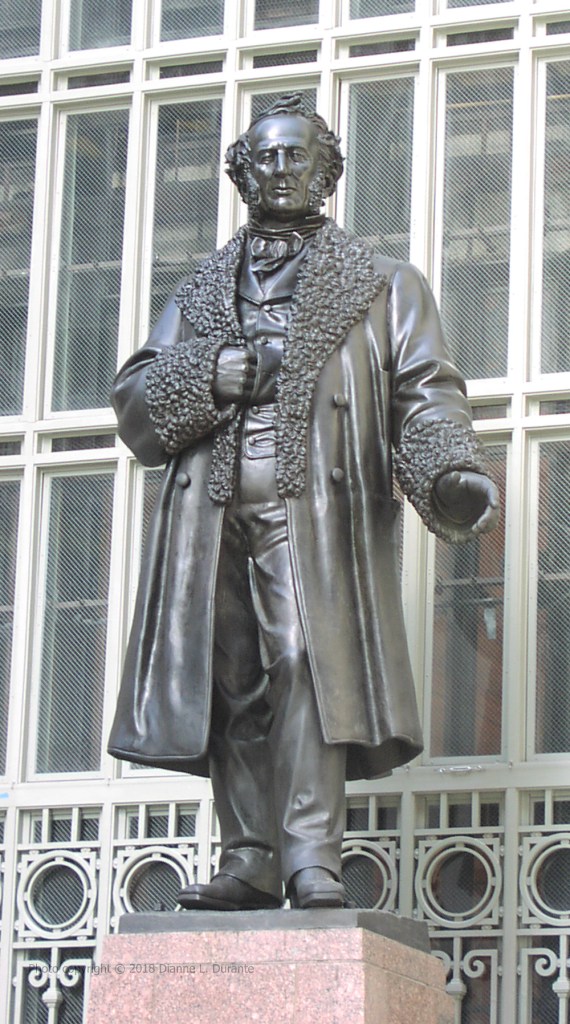
The Vanderbilts are descendants of Commodore Vanderbilt who was a railroad magnate and commissioned the original train depot in 1870, which was replaced by the Grand Central Station we know now in NYC on 42nd street. His statue is standing at the top of the station, cars going around the viaduct can see Commodore standing there, still guarding his fortunes. Ironically, he was an extremely frugal man and while having 13 (imagine, 13 children!!!) his wife had to run a hotel to feed and clothe all of them. His descendants, however, in true Gilded age fashion, were overindulgent and prone to lavish spending, which resulted in complete demolition of the enormous fortunes amassed by the Commodore. The famous news anchor, Anderson Cooper, did not have any inheritance, despite being a direct descendant of the great Vanderbilt family.
The Viewers of the “Gilded Age” series on HBO Max will know the Marble house built by Alva Vanderbilt, who commissioned the “Petit Chateau” in NYC (no longer in existence). Married to Commodore Vanderbilt’s grandson, Alva was a force of nature. Despite her new money status, she fought her way into old money high society and, subsequently, took it over as it’s queen. The Marble House was designed by the most prominent Gilded Age architect, Richard Morris Hunt, completed in 1892, for Alva’s daughter, Consuelo. The mansion, stuffed with 500,000 cubic feet of marble, was built as a wedding present. Consuelo was forced to marry the Duke of Marlborough, connecting Gilded age new money to the European aristocracy. But Consuelo loved someone else and wept under her veil going down the isle. Certainly, the old adage money doesn’t bring happiness rings very true in this case.

In 1893, the Vanderbilts commissioned the Breakers. Completed 2 years later in 1895, with 70 rooms and 27 fire places across 13 acres and even electricity, the biggest novelty at that time:
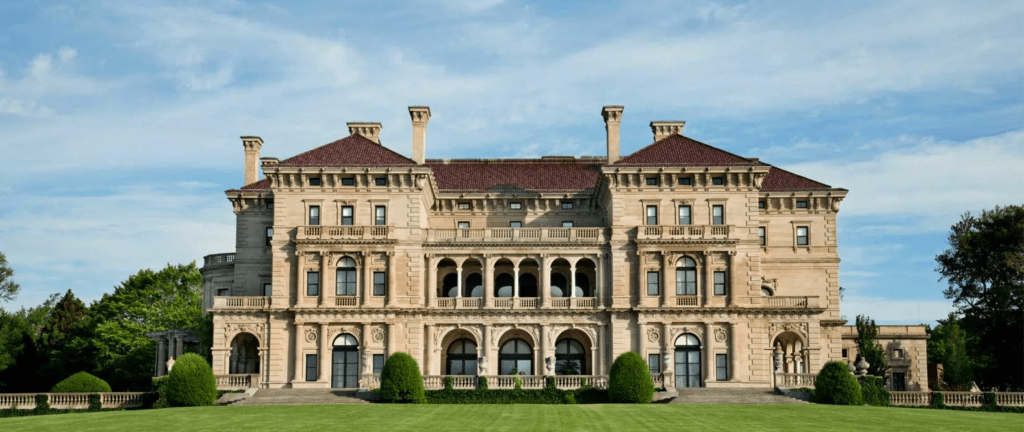
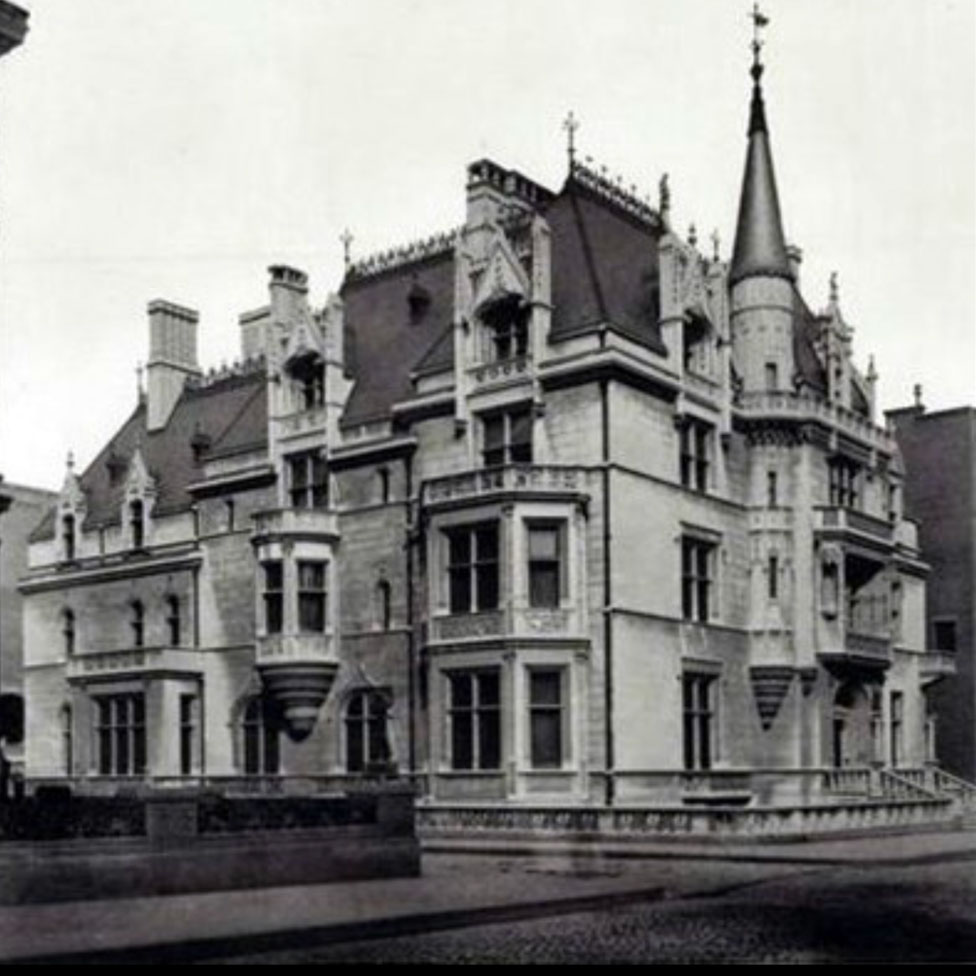
It’s a surviving example of the scale and grandeur that was en vogue during the Gilded age, while their primary NY residence called the Petit Chateau, also designed by Richard Morris Hunt, completed in 1882, it was demolished in 1926. This YouTube video from This House provides a glimpse into the Renaissance splendor of the “Petit Chateau”. One thing is certain, there was nothing “Petite” about the largest and most lavish residence to ever grace New York City skyline. Every millimeter, every surface of the Chateau was carved, decorated, gilded, covered with art, antiques, china, tapestries, chandeliers and dripping with luxury.
The Gilded Age was all about income inequality. The people who controlled the industries became Uber wealthy, while the people that worked for them became poorer and sicker with every generation. The names still know today owned railroads, steel, shipping and later, oil, while their workers had deteriorating living conditions, their kids had to work and there was no universal healthcare or education. The titans of industry, as they were called, the Vanderbilt, Rockefeller, JP Morgan, Carnegie, Frick, Astors, among others, became the new world royalty. The real, un-gilded, truth was that the growth and the money was built on the back of people. The workers in Carnegie’s steel mills worked 12 hour shifts, 6 days a week, without any protection gear in conditions that most people couldn’t survive for even 10 minutes. Imagine hot lava spewing at you. They created the steel that built American skyscrapers but were barely able to put food on the table, were discarded and thrown out if injured or killed. They organized a strike to ask for 8 hour working days and 5-day working weeks. The strike was violently put down, Carnegie went to his native Scotland, leaving the cruel Frick to deal with his workers and the strikers were put down with guns, the militia was called in to put down their rebellion, getting Frick to be called the most hated man in America.
Today, one can easily visit the Frick Museum on Fifth Avenue and 71st Street. From the very beginning, when Frick purchased this land, he wanted the design to be his private residence and house his collection of art and antiques with a trust that would convert the residence to a public institution after his death. This way, they ensure their names were remembered through history, and their memories were of great man, cultured and committed to collecting art while creating spaces for the masses to appreciate their greatness.
During his life, however, Frick was known to be cruel, badly mannered, uncouth and unwelcome in high society. He was not admitted to the gentlemen’s clubs, so he created his own and poured money into it to make it prestigious and coveted, called the South Fork Fishing and Hunting Club. To get to this secretive club, the members had to pass atop a dam that engineers knew was unstable and petitioned for it to be reinforced. Instead of reinforcing it, Henry Clay Frick ordered the dam to be filed down to fit his super wide carriage. The dam was actually lowered, made even more unstable to fit his ridiculous gaudy carriage and as a result, caused the greatest flood in American history. On May 28, 1889, when a storm hit the area, the unstable dam gave way and Johnstown was flooded, over 2,200 people were killed, thousands of homes wiped out. When the people tried to hold the robber barons accountable, they not only lost in court but actually went bankrupt bringing this suit.
Why does this matter, how does this affect our lives today, over a century later, in a modern society filled with technology and opportunity. The parallels are gobsmacking. The wealthy lead exuberant lifestyles, do not pay taxes, show off and flaunt their wealth at any opportunity. And we believe they deserve their billions because they worked so hard. Jeff Bezos, Elon Musk, Koch Brother are the new Vanderbilts, Rockefellers and Carnegies. They use their wealth and influence to diminish labor laws, to pay less taxes, to effectively roll back the progress that has taken over a century to achieve, such as public schools. Not to mention medical care, US is the only nation in the OECD (Organization for Economic Cooperation and Development, basically, the wealthiest nations in the world) that does not have access to healthcare as a right. The wealthy get the best healthcare, the poor can die in the streets and if you’re in the major cities, especially New York, San Francisco or Los Angeles, you will see this unfold in real time. Homelessness is growing, there’s no affordable housing, public schools are based on zip codes, and being in a wrong zip code might feel like being in a war zone.
First and foremost, it informs our understanding of how these palaces came into being and how this influx of wealth was created and spent. We can draw a direct line between that period and the present day where many of our laws were set up as well as the social contract between the individual and society, this myth of the greatness, that if you work hard enough, you can have your American dream and wallow in luxury is as true as its opposite, if you’re poor and miserable its no one fault but yours, you simply did not work hard enough and do not deserve your share of the pie.
In 1879, an economist Henry George, published a 500 page tome called Progress and Poverty. Based on his own struggles that ended with him begging on the street to feed his two young children. The book became a best seller. It broke down this myth that if you work hard enough, you will make a great living and your life will get better and better. This land of opportunity, is in fact, opportunity limited to some. If you’re wealthy, you’re bound to get wealthier. It’s simple math, when there’s no income tax, property tax, inheritance tax, labor laws or workers compensation to protect in case of work accidents, your wealth will grow and multiply. While the actual workers, will live below the poverty level, having to work 12 hour days in enormously difficult conditions wouldn’t yield enough income to save and will not experience upward mobility.
What Progress and Poverty called for, at that time, was radical, revolutionary and anti-American. He called for taxes on the wealthy and for labor laws to protect the workers. Gradually, over decades, his vision has come to pass. We have labor laws in place that prohibit children from working, that ensure safe working conditions. By 1918, most states had compulsory education laws, it doesn’t mean they had the schools and infrastructure to accommodate them but it was a recognition that all American children deserve free quality education. In 1919 the women finally won the right to vote. Now in 2024, abortion has been repealed and women’s rights are being rolled back. There’re economic policies on the right that will have far reaching consequences on the overall economy and, particularly, the working class. Reducing taxes on the wealthy and corporations, will reduce the income base and will cut necessary services, reduce the quality of education and undoubtedly, increase income inequality.
We’ve made progress, we have laws that prohibit child labor and limit the work week to 40 hours but we’re still far from respecting human rights when it comes to labor. As Covid revealed, there’re generations of workers that make low hourly wage without health insurance, vacation days or sick pay. There’re no restrictions to laying workers off, or hollowing out pensions funds they’ve contributed to their entire lives. The cost of private education and universities is much higher than median annual wage. All of this means that what has occurred in the gilded age and led to the Great Depression is bound to happen again. We, as a society, are obsessed with the lone genius theory and watching billionaires spent on lavish events, ginormous houses, super-yachts, private planes, things that make no sense while destroying our planet and reducing the overall social well-being.
The wealthy of the Gilded age were committed to philanthropy and giving to the needy. Many of the organizations we still rely on today such as the Red Cross and the Public Library, were established at that time. That tradition continues today in some capacity, where the wealthy dress up and have incredibly lavish fundraisers, and some of the money goes to organizations that are supposed to help the needy, raise funds for social causes. But it’s a drop in the bucket. The impact is minuscule, while giving the wealthy a clean consciousness and a reason to parade around in their finery. What we’re not doing is changing laws and social policy to root out these issues at their core, to ensure we have functional institutions and well-funded education and health care. Welcome to the Gilded Age 2.0. It’s spectacular for the Uber wealthy and devastating for the rest of us.
Leave a Reply