
Top Ten Books of all time
It’s summer, perfect time to pick up that novel you’ve been looking forward to reading. Whether you’re in the park, on the beach or cuddling up on your comfy couch, grab a cold beverage, sit back, and enjoy a great book. Dora and I love books, not reading on the iPad or Kindle but having an actual physical book, turning the pages, making notes in the margins. There’s nothing more satisfying than a great book, where the story unfolds capturing the imagination and the prose is beautiful, uplifting, and inspiring.
It’s not hard to read, it’s hard to carve out the time to read and get rid of all those distractions, whether environmental or inside our heads. It’s the ability to absorb the words and to really think about the narrative, putting worries and to-do lists aside to be truly present.
Top ten books of all time are comprised of our favorite novels. We tried to choose the best books by the most incredible authors that we love and appreciate and can come back to time and again. These books are like close friends, we always enjoy their company:

1. Master and Margarita by Mikhail Bulgakov
I’ve read this book and fell in love with it in Russian, but I’ve also read the English translation and it’s honestly not bad. I thought there would be things that don’t really translate, that are so deeply rooted in culture, in a certain place and time but it’s actually very relatable and quite funny in translation as well. It’s entertaining while bringing up huge existential questions of why we’re here and what’s really important in life.
There’re hilarious scenes, such as the theatre stampede. The stage is converted to gorgeous pop-up shops, the audience is invited to choose whatever they like. For free. People picked beautiful clothes, shoes, cosmetics, perfumes but upon leaving the theatre, all of these things just disappeared and what ensued was a madness of half-naked people, running around without understanding what has transpired and how they have thus been fooled.
The ones who were able to tote the line were the most praised, while the ones with the most talent, like the Master, were destroyed or driven to madness. This book was censored in the Soviet Union because it exposed the hypocrisy and ridiculousness of the Soviet regime and its bureaucrats. It wasn’t actually published in full in its native language until 1973, over 3 decades after it was written.
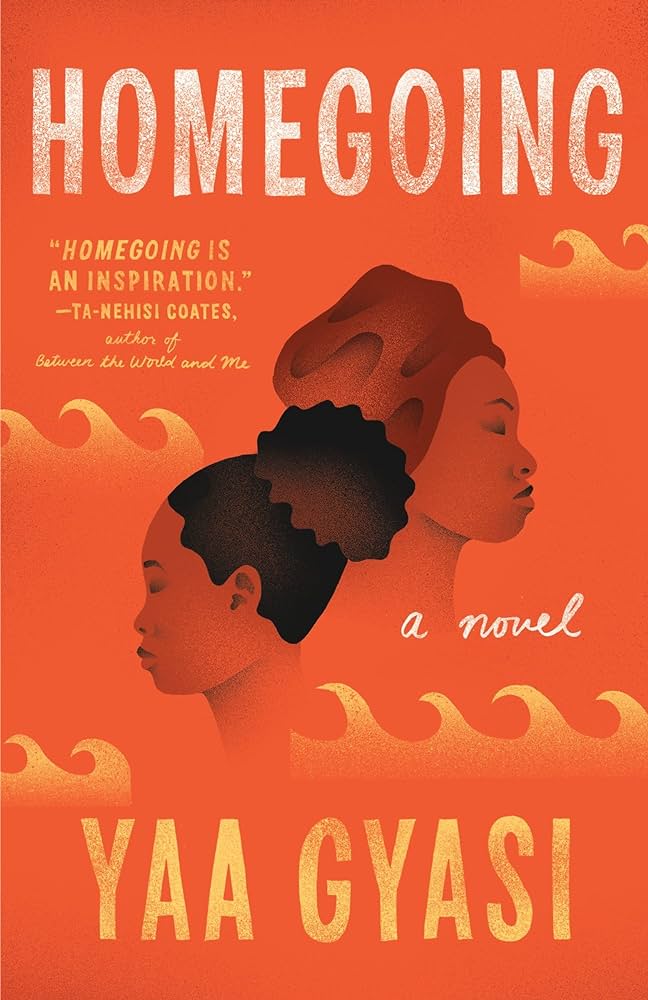
2. Homegoing by Yaa Gyasi
This debut novel by a Ghanaian-American author knocks it out of the park. It’s one of those books that at times you can’t put down and at times, you simply can’t keep reading. It’s beautiful and heartbreaking, its incredibly well researched and provides a real education on the slave triangle and the human costs of slavery in all its heart-wrenching forms. There’s horrendous abuse and pure love, there’s racism and history, there’re different sides of the same family tree that have been shaped by the forces of destiny.
“We believe the one who has the power. He is the one who gets to write the story. So when you study history, you must always ask yourself, Whose story am I missing? Whose voice was suppressed so that this voice could come forth? Once you have figured that out, you must find that story too. From there, you begin to get a clearer, yet still imperfect, picture.”
Now is the perfect time to read this book, as we try to reconcile with our past, learn things we should have been taught, and fill in the gaps to gain more insight into our present.
Click here to watch the author’s discussion about her novel on YouTube.
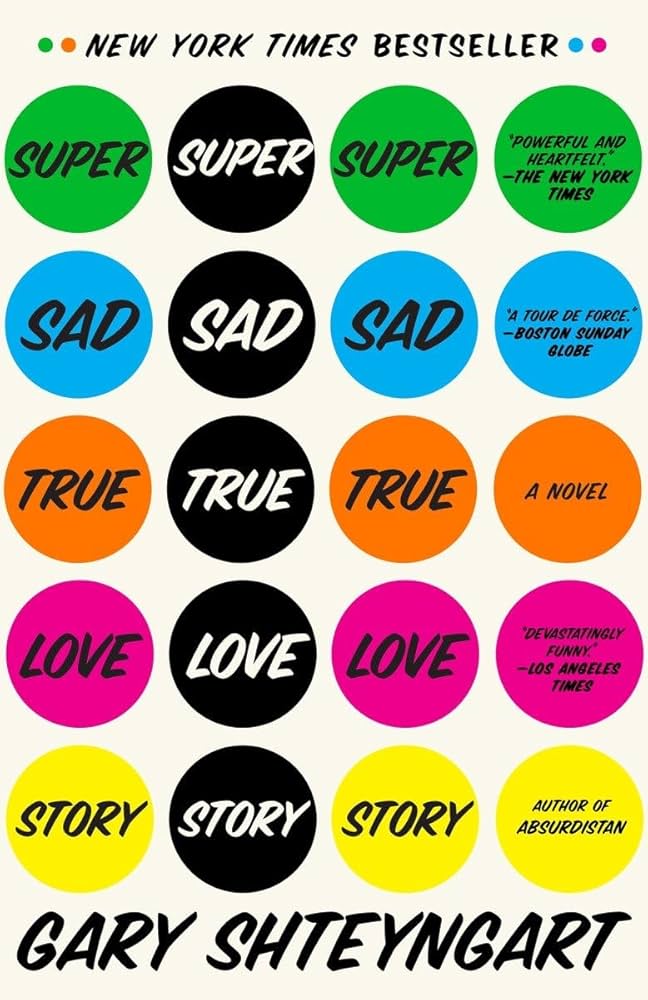
3. Super Sad True Love Story by Gary Shteyngart
In this futuristic, dystopian novel, books are called “bound, printed, nonstreaming, media artifacts.” The first time I read the book, it made me laugh, now it makes me cry because it’s so true. People don’t read, designers use books as decoration, spines facing the walls and organized by color.
This novel’s protagonist is a pathetic, middle-aged man. He’s a Russian immigrant navigating the future of America where we are even more disconnected from each other. Consumerism rules the day, we’re addicted and completely dependent on our devices, human worth is distilled down to credit scores, and totalitarian regimes keep people in check. Some of the themes are hilariously funny, some cut like a knife because 14 years after it’s publication, we’ve moved even closer to the future described here and it’s far from pretty.
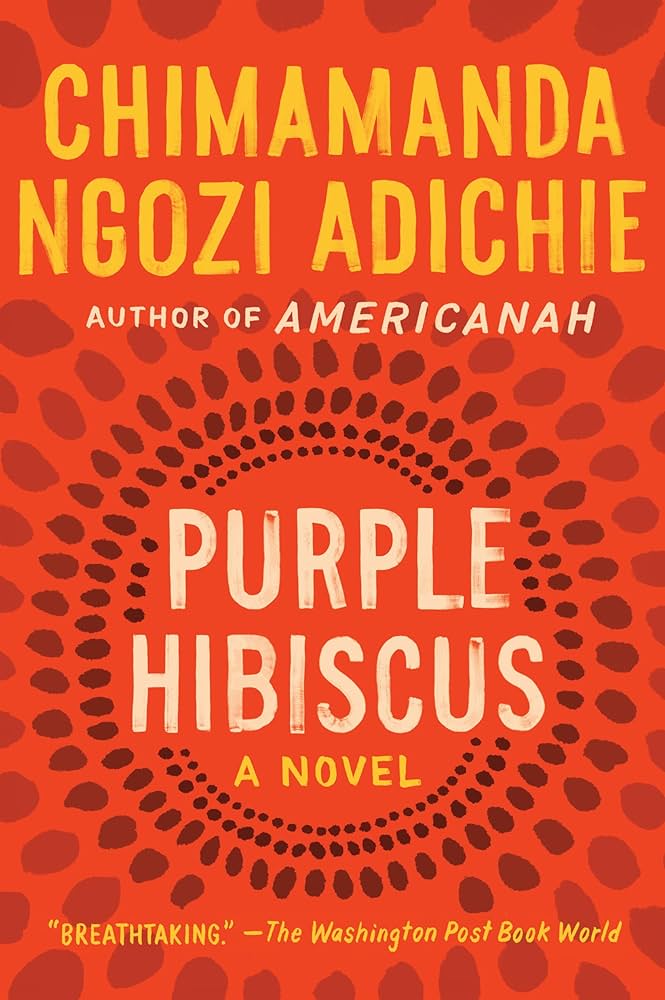
4. Purple Hibiscus by Chimamanda Ngozi Adichie
I love everything written by this Nigerian-American author but still faithful to the first novel I read, “Purple Hibiscus.” It describes a well-to-do family, with all the entitlement of privilege and money in post-colonial Nigeria. The big man here is well-respected, he’s a pillar of morality and values, a community leader. However, behind the scenes, he’s an intolerable tyrant, emotionally and physically abusive despot. It’s a common theme across the world. While the settings and values might differ, there’s a tremendous gap between what wealth and privilege looks like in public and what the family life is in their home.
To watch an incredible TED talk by this author, please click here.

5. Let’s Explore Diabetes with Owls by David Sedaris
I can’t think of a better author to bring to the beach. Light, funny, sarcastic, witty, and always well-written prose. The author take cues from his childhood and family life to weave stories that are human, touching and really hysterical. Let’s explore Diabetes with Owls is a collection of essays, that are full of charm and funny anecdotes.
His signature self-deprecating writing is hilarious and unique. Like a great painter, he developed a style that’s unmistakable his. Just like we can spot a Van Gogh, we know it’s Sedaris when we read something like this: “It’s true, I was never a classic beauty. Some would argue that I fell short at every level.”
Only thing that’s better than reading Sedaris, is to see him onstage. He’s even more hilarious in-person. His tour schedule is published on his website.
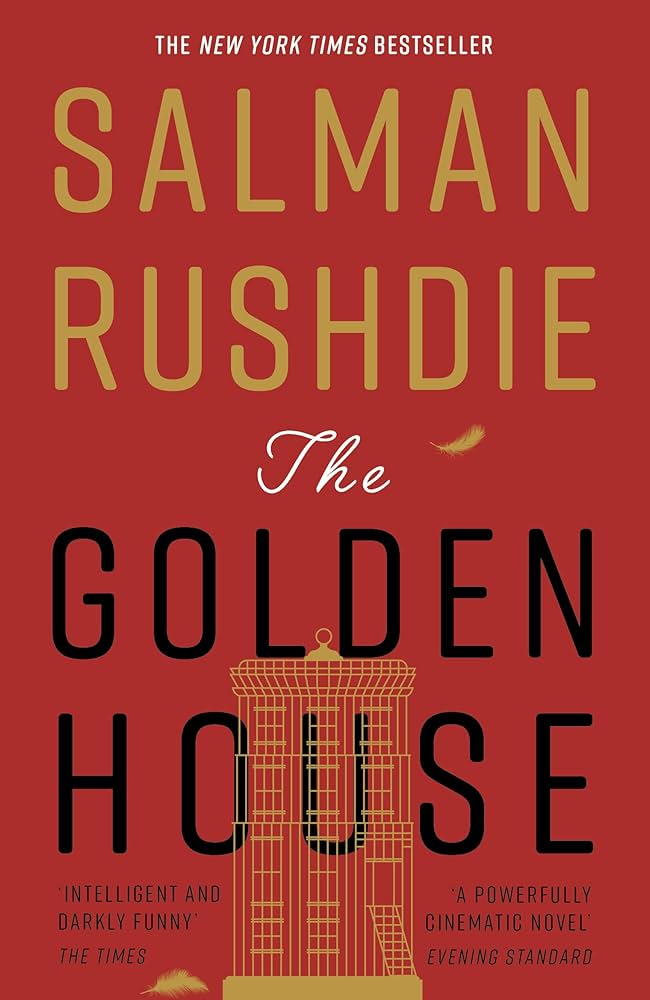
6. The Golden House by Salman Rushdie
Rightly considered one of the best authors of our time, few writers have had a more exciting life. Knighted by the queen of England, showered in honors and awards, Rushdie had a fatwa issued by the Ayatollahs that resulted in several attempts on his life. While the book that enraged religious fanatics was the “Midnight Children,” I consider the “Golden House” to be his masterpiece. Beautifully written, it weaves the themes of wealth, family, terrorism, and love in a beautiful and heartbreaking narrative. The book is full of writing that can be memorized and quoted, such as:
“How does one live amongst one’s fellow countrymen and countrywomen when you don’t know which of them is numbered amongst the sixty-million-plus who brought the horror to power, when you can’t tell who should be counted among the ninety-million-plus who shrugged and stayed home, or when your fellow Americans tell you that knowing things is elitist and they hate elites, and all you have ever had is your mind and you were brought up to believe in the loveliness of knowledge, not that knowledge-is-power nonsense, but knowledge is beauty, and then all of that, education, art, music, film, becomes a reason for being loathed…”
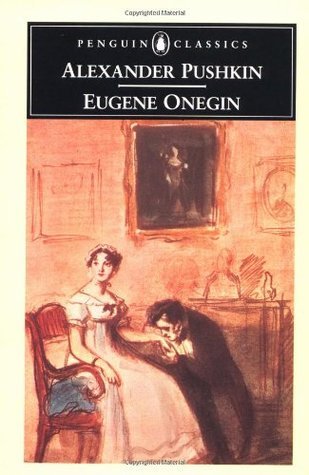
7. Alexandre Pushkin Lyrical Poetry/Eugene Onegin
Every Russian speaker grew up learning the verses of Alexandre Pushkin’s poetry by heart. My grandmother, at 94 could recite pages and pages of his lyrical poetry. Written in perfect rhyme, it’s brilliant and beautiful. Eugene Onegin has been translated into many languages, there’s a famous opera set to Tchaikovsky music and a ballet that’s performed all over the world. At its heart, like all classical stories, it’s about human nature. Our circumstances change but human nature does not. Onegin inherited a lot of money, he lived a frivolous life of beautiful clothes, dress up balls, he was admired and accepted by all in high society. But he was an empty shell, he had nothing to dedicate his life to and this lack of morals and goals led him to commit an act that would haunt and define the rest of his life.
I imagine Eugene Onegin living now, in 2024, I think he would be an influencer, posting selfies in the most glamorous, fashionable outfits. He would have a strong brand, have access to the most flashy events, celebrity lifestyle, envied and desired. But deep down, he’s a very lonely, sad and angry person, shallow and unambitious, he would be judgmental and mean and would troll people online, to spray his venom anonymously.
Link to a great translation of the first chapter.

8. The Unbearable Lightness of Being by Milan Kundera
“The Unbearable Lightness of Being” is considered a modern classic. Kundera is a Czech author and his work was very much informed by the Czech resistance to the Soviet invasion and control, in fact, the book is centered around that invasion, when the Soviet tanks show up in Prague, the protagonist, Thomas, a doctor escapes to Switzerland with his wife. I read this book framed within the totalitarian regime’s control of its population, where anything horrid can happen at any time, there’re no laws guiding human behavior, people were simply disappeared when they didn’t agree with the regime. Therefore, the lack of moral behavior, displayed in Thomas’ affairs and unfaithfulness to his wife, this feeling of lightness as an expression of someone who doesn’t know what tomorrow will bring and if there will be tomorrow at all, so he let’s himself go completely. Unbearable lightness of his actions causes unbearable sorrow for his wife, who dreams of naked women around the pool that he shoots indiscriminately and laughs as they die. She knows of his affairs and she still loves him.
The book was initially published in French, and was not translated into Czech until the country overthrew the Soviet despots in 1989.

9. The White Tiger by Aravind Adiga winner of the Booker Prize in 2008
As most great books, the White Tiger has been made into a film and in this case, the film does the book justice.
It explores the key themes that have made this books so moving, so controversial and also, so unforgettable. The first time I read it, I couldn’t foresee the ending and couldn’t put it down. The protagonist, Balram Halwai, is born in a rural village in India, lives with his extended family in dire poverty and is destined for a life of servitude to his masters and his elders. The fact that he breaks with both conventions, turning his back on his family and committing a crime against his employers, is what makes this book so controversial and so unique.
When Aravind won the Booker prize, there were many people in India upset for many reasons, including the fact that Aravind is an Oxford educated, upper class Indian writing about the experiences and feelings of a servant.
The book also exposes the country’s corruption and immense inequality at a time when India, part of BRICs (Brazil, Russia, India, China) was considered to have achieved tremendous economic gains and benefits of globalization due to overtake western countries in economic growth.

10. The Island Beneath the Sea by Isabelle Allende
Isabelle Allende is a powerhouse, she’s an amazing human being in so many ways, a couple lines in a blog could never do her justice but here are a few highlights:
- She’s a Chilean born in Lima, Peru
- In 2014 she received presidential Medal of Honor awarded by Barack Obama
- She has sold 75 million books
- She’s a cousin of Salvador Allende, who was a progressive president in Chile, violently deposed by Augusto Pinochet in a military coup in 1973, she had to flee to Venezuela with her family
- She wrote close to 30 novels and works on nonfiction and received so many awards you have to scroll pages and pages to read them all
- She’s an activist and started her own foundation focusing on women empowerment and health
While I love all of Isabelle Allende’s books, my favorite is The Island Beneath the Sea. It’s historical fiction at its best, that describes real historical events and provides a solid foundation for understanding current social and political issues in Haiti and New Orleans. The novel draws us in with personal stories of fictionalized characters that make the story emotional and poignant. Brava Mrs. Allende!!!! You continue to inspire generations of readers and to provide a window into history that allows us to understand current events as they unfold.
Leave a Reply