

A new exhibit at the Met Costume institute is mesmerizing. The title comes from the historical gowns that are presented laying down, as sleeping beauties, because they’re too fragile to be put up on a mannequin.
The name of the exhibit, Sleeping Beauties – Reawakening Fashion is beautifully exhibited in the historical pieces that are too frail to display on a mannequin so, like sleeping beauties, they lie flat inside a glassed displayed case, waiting to be kissed by their prince. The reawakening part is the ability to admire these gowns through an immersive, multi-censory experience, using sight, sound, touch, and smell. The beginning of the show presents a gown that’s been reawakened through AI – across from the actual garment is an artificial representation of how this gown would look on a mannequin and how it would move. It’s spectacular but too small to be truly admired and it’s quite crowded to really take the time and compare the real sleeping beauty with its AI reincarnation. The gown from the venerable house of Worth circa 1887 is brought to life as a hologram dancing Tchaikovsky’s waltz.
The exhibit presents fashion art pieces across 4 centuries of design. With the oldest piece from 1614 to the most recent 2024 designer collections. The show is popular, its busy and hard to walk around. I’d recommend watching the Met video prior to attending and finding a time that’s the least busy because most of the exhibits are structured like a hallway, to give a progression from one theme to the next but are all pretty tight spaces.
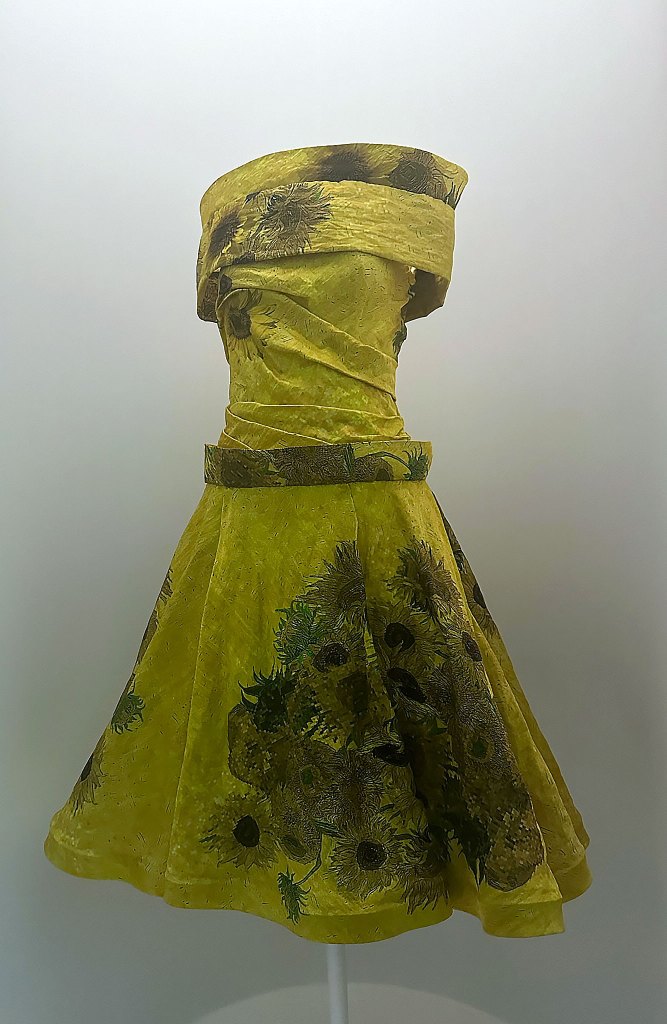

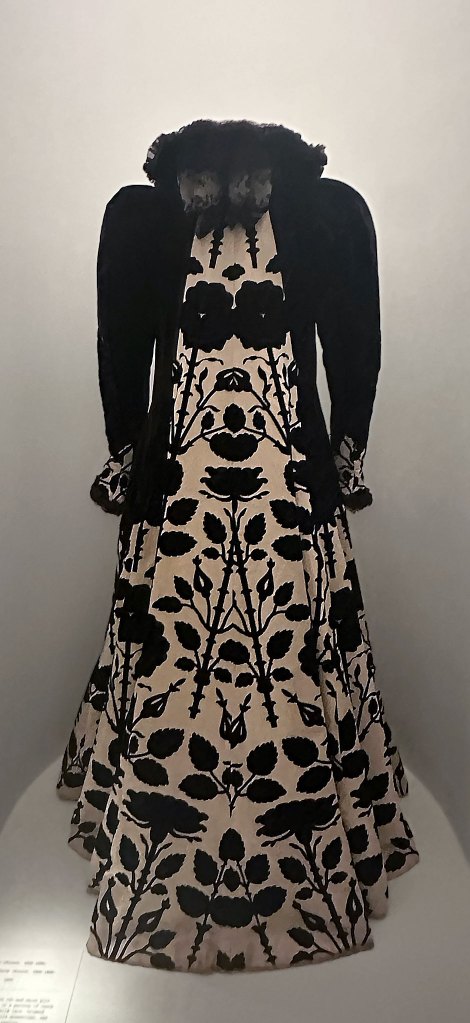

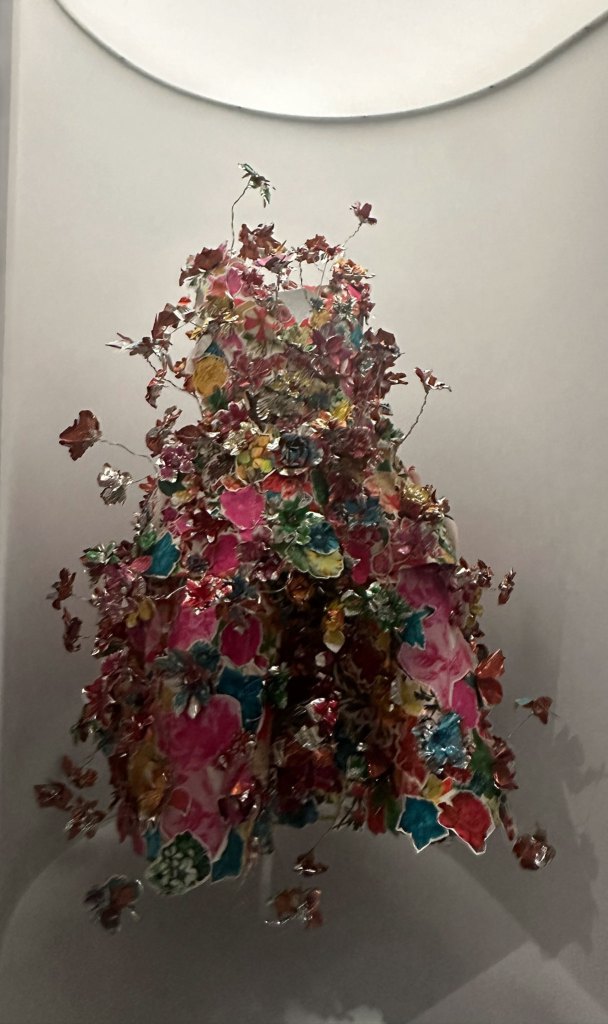
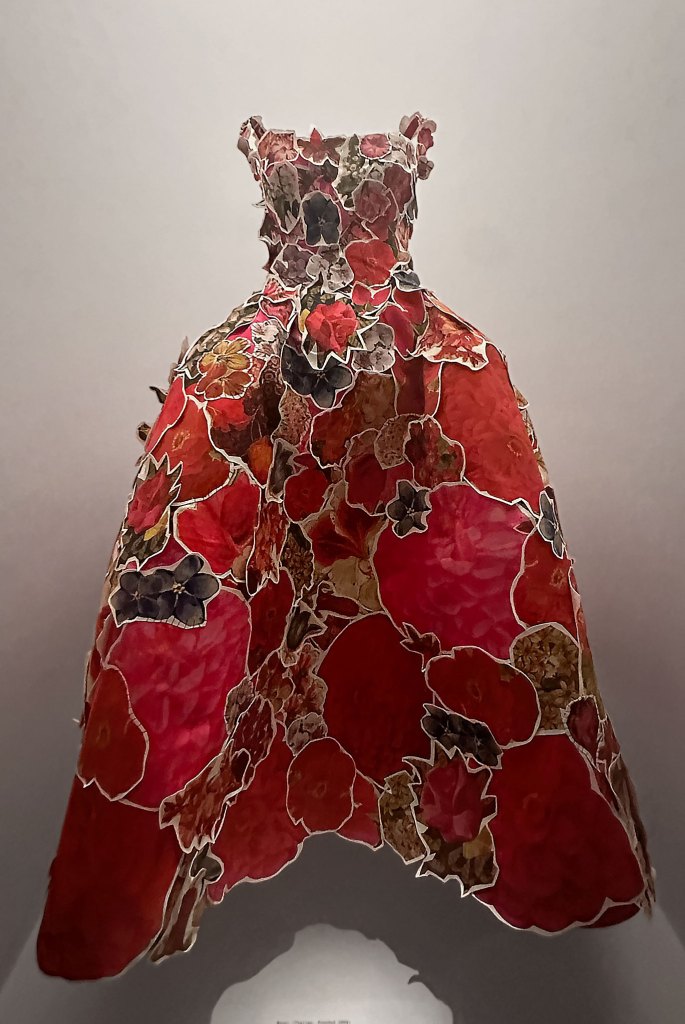


There’re soundtracks of skirts rustling, so we can imagine the ladies wearing these huge gowns and the sounds of the layered fabrics as they walked and greeted each other. There’re olfactory additions with smells extracted from the dresses bottled up in vials to give the viewer a whiff of what it would be like to be next to this gown and the rich life it has lived.
The unifying theme is nature. In fact, what is fashion if not nature brought to life. The flower prints and embroidery, the bright, exuberant colors, nature has always been and will always be our greatest inspiration. The sleeping beauties fabrics came from nature as well, layered silks, embroidered flowers, it gives a clear progression of fashion from the classic sleeping beauties to their contemporary synthetic counterparts. There’re exhibits I can personally skip, such as fake flower constructions for head garments but there’re pieces that I could spend all day, if not all month, admiring and re-examining, particularly the this Maison Margiela dress from 2014 collection inspired by Van Gogh’s irises. This dress made from beads and sequins is truly a work of art and makes the flowers come to life.

Maison Martin Margiela (French, founded 1988)
Ensemble, autumn/winter 2014-15 artisanal
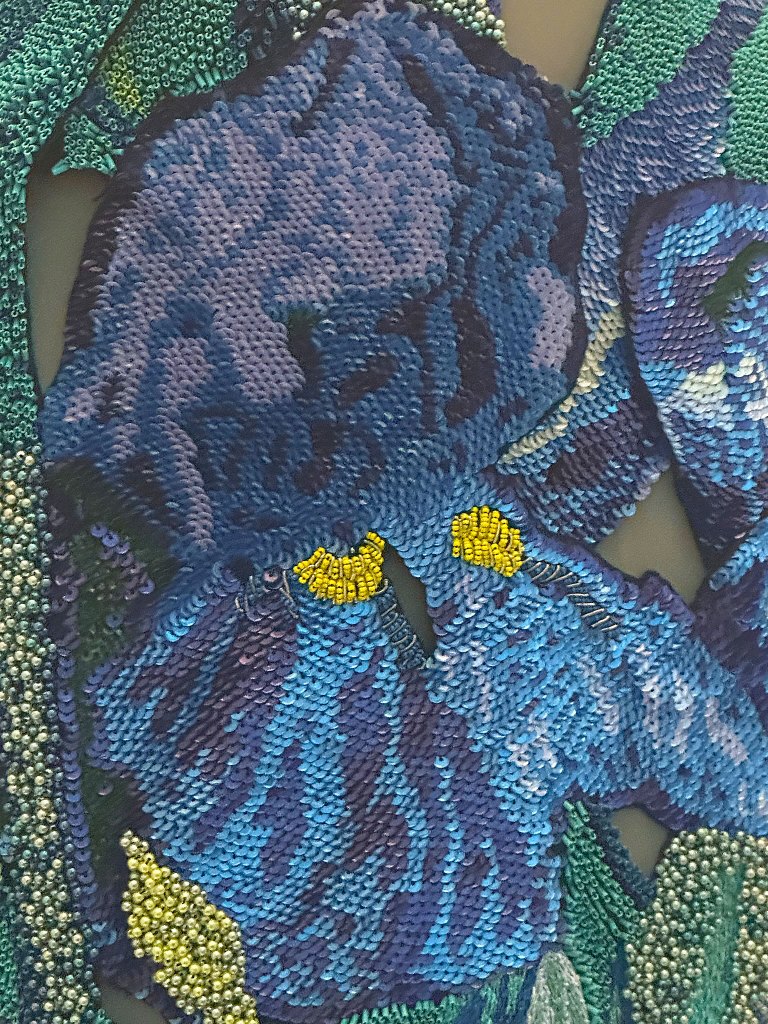
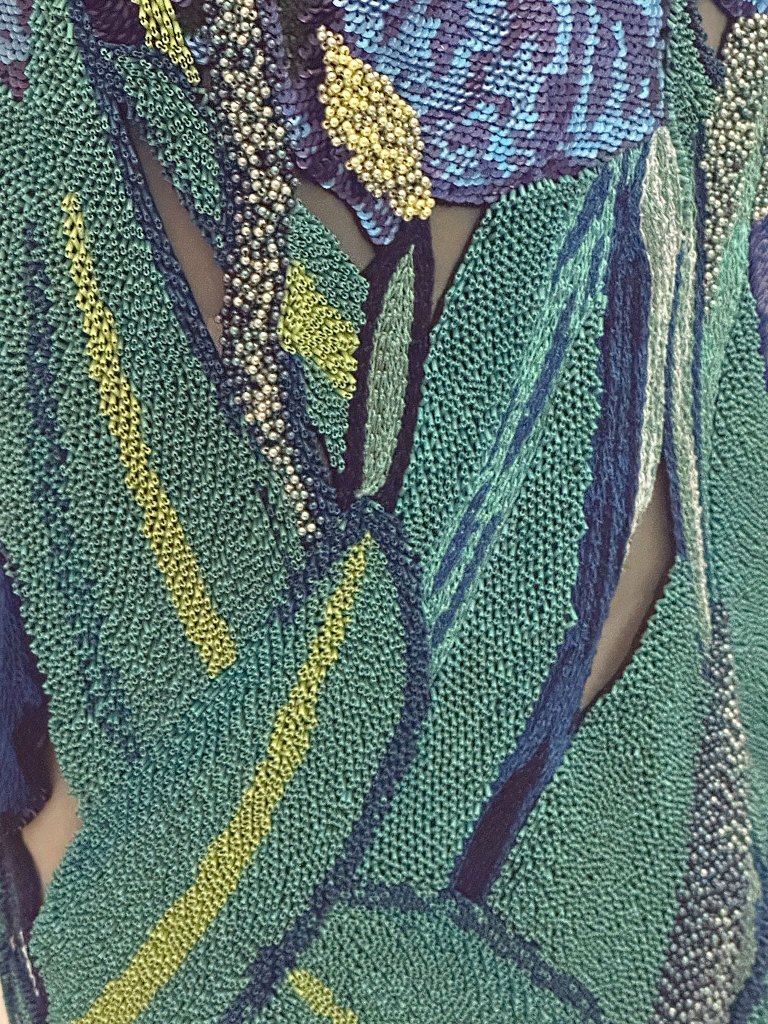
Luckily for us, Van Gogh’s painting that inspired these gorgeous pieces is part of the Met permanent collection and can be seen in gallery 825. It’s fitting that the original painting had a pink background that has faded with years as one of the runaway pigments, much like the sleeping beauties in the costume institute collection that have an inherent vice that makes them so ephemeral, unstable and fleeting. Paint, just like threads, can easily wear away and we can only imagine how much more vivid and bright the originals were when they were created.
Vincent Van Gogh Oil on canvas Irises 1890:

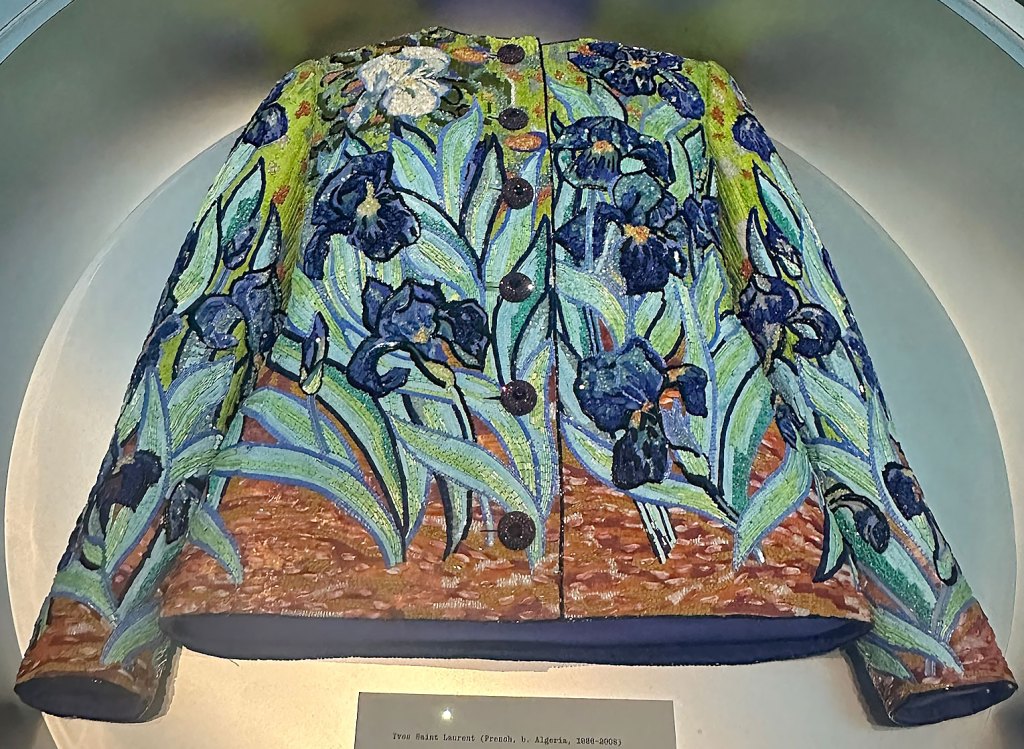
Below is another gorgeous garment inspired by the irises made by Christian Dior. One can easily see how the designers of this jacket studied, loved and admired the original painting. Paying full respect to the beautiful creation of Van Gogh, the detail and the expert beadwork makes the flowers come to life with so much movement, color and natural beauty.
As usual for the fashion collections, most of the garments are not practical and highlight the temporary nature of fashion, its ephemerality. However, there’re historical pieces that have relatable, timeless quality and have gone on to inspire modern designers and would be a welcome addition to any fashionista’s closet. The construction, the detail, the incredible quality of these pieces deserves our gratitude to the curators and people working to preserve these incredible works of art. Imagination can only wonder at the work, the craftsmanship and the love that went into creating the incredible fabrics, the skill of the women who dyed the threads and embroidered the fabrics, careful not to pull the silk and talented enough to create a three dimensional representation of the most exquisite natural elements, flowers, birds, brought to life through their skills and painstaking work. It would take endless hours to create a single garment. The fabrics and the embroidery was so precious that often, it was reused to create another garment or to update an existing dress to a more fashionable reincarnation.
This concept of reusing fabrics is inspiring contemporary designers to be more mindful of their eco- footprint and to create fabrics in a more sustainable way as well as to reuse materials for new creations.
There are a few flowers that are given a special place. Red rose is prominent, of course, as the flower of love, passion and desire.

Sarah Burton (British, b. 1974)
Dress, autumn/winter 2021-22
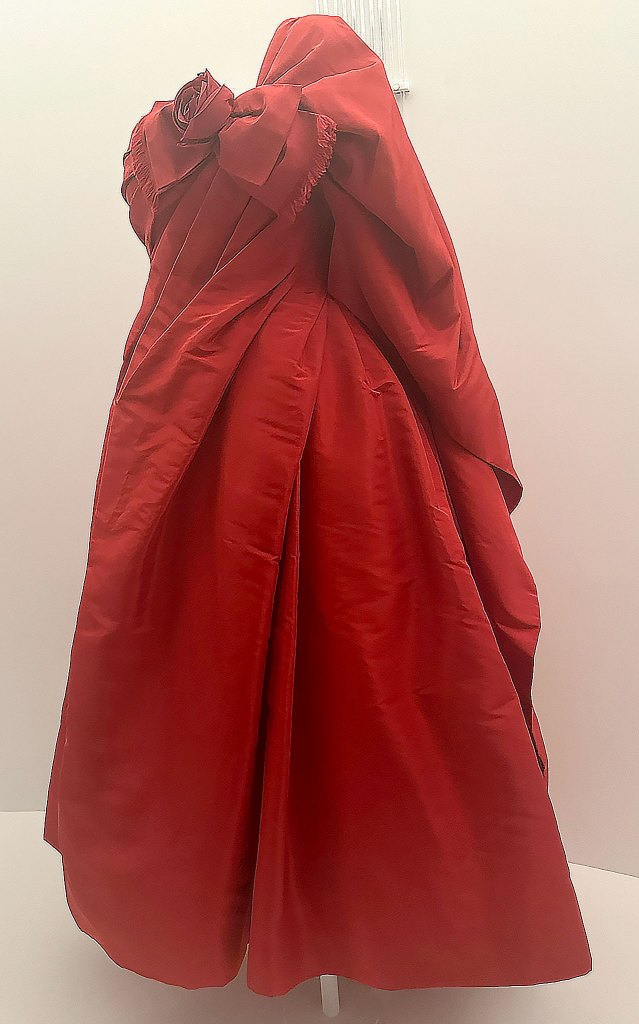
Yves Saint Laurent (French, b. Algeria, 1936-2008)
“Rose Rouge” evening dress, spring/summer 1958
Tulips are given their high court, for their beauty and color variations. The poppy makes a prominent appearance with the poem by McRae from WW1 called Flanders Fields being played on repeat, which evokes poppy in more somber tones of blood and life cut down at its prime.

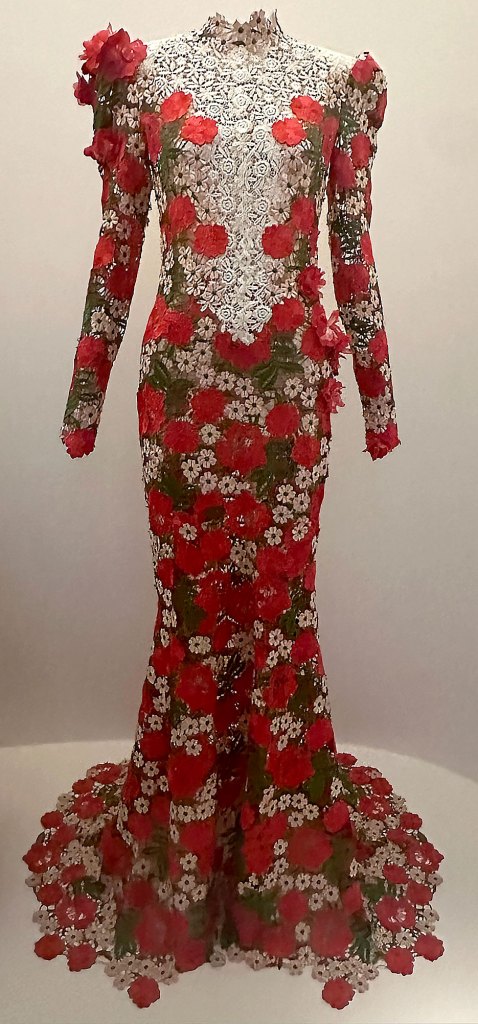

Evening dress, autumn/winter 2021

Court suit, 1774-93

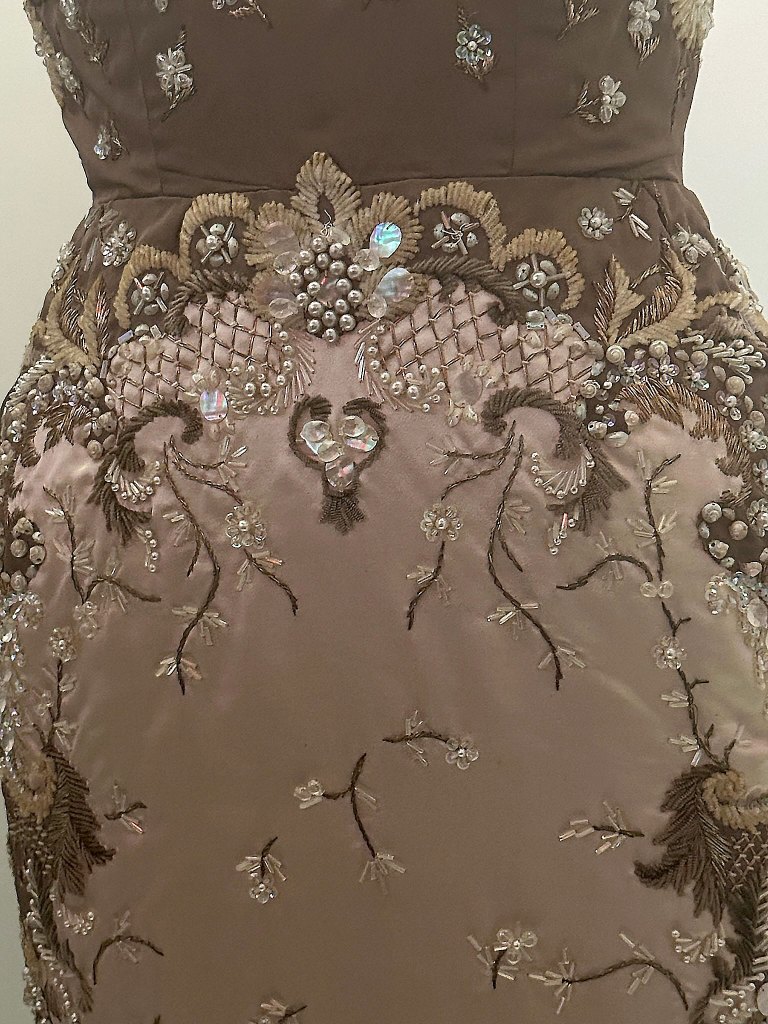
Pierre Balmain (French, 1914-1982)
“Oriane” evening dress, autumn/winter 1954-55


Charles Frederick Worth
“Tulipes Hollandaises” evening cloak, 1889
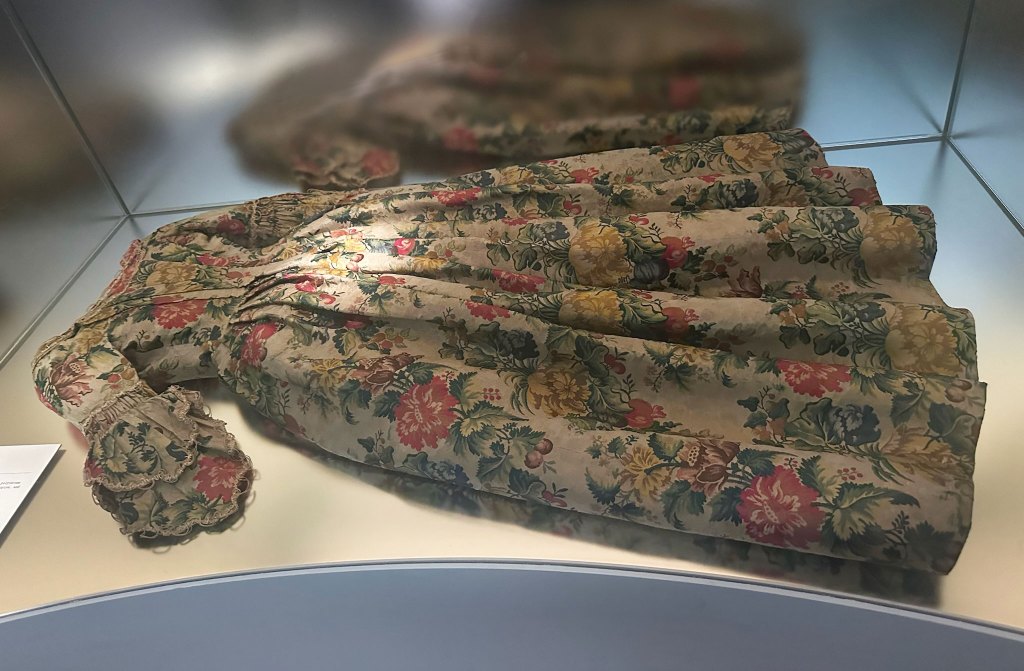
The birds, of course, are given their place as their feathers have been hugely popular for making clothes and especially in Millinery, making exorbitantly expensive hats for society ladies, which led to many species being completed demolished to extension. The exhibit reminds us of their beauty and the heartbreaking devastation with the lesson for today to find more sustainable and eco-friendly alternatives.


Alessandro Michele (Italian, b. 1972)
Cape, autumn/winter 2017-18
Some of the modern designs are so eco-friendly that they can’t actually be worn. The top contender is the jacket with planted seeds. Loewe collaborated with an eco-biologist to the create this sleeping beauty with the video display that shows how it was seeded and how the seeds grew on top of the jacket. This one is not meant to be worn, it was created to be a sleeping meadow and that’s how it’s going to stay.
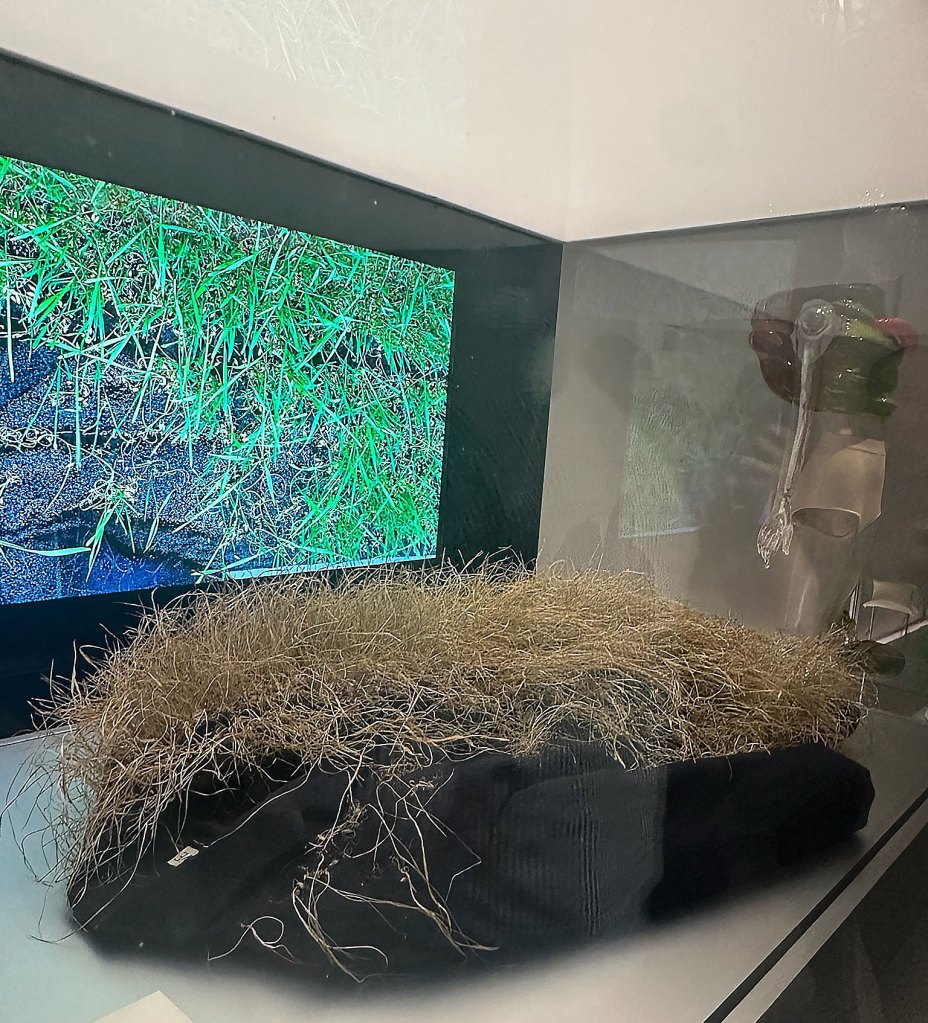

There’s one part of the exhibit that I, personally, don’t consider beautiful and that’s the bugs and the beetles. There’s certain beauty to every creature but I’ve never been inclined to wear bugs and would likely not be able to stomach some of these creations, even though, let’s be honest, no one is asking me to wear any of these garments. Most of them were created for display and not to be worn, as the dress with the flowers on metal wires. There’s an audio display that plays how the dress would sound if it was worn but the truth is, how can anyone move and sit in a dress that’s not only huge and heavy but has wires coming out of it with flowers at the end of each wire.
Overall impression of the show is wonderful but I wish the display spaces were wider, the member mornings are a blessing as only members are allowed in on weekdays 9-10 am but weekends are an absolute nightmare with the long lines and the huge crowds. I’d definitely go see it again as I need time to look, discover, process and reexamine but not when its crowded.
Go see the show, if you can, or peruse this video to give you a flavor of the exhibit and the inspiration behind it.
Leave a Reply